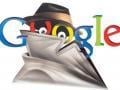
Google got away with Wi-Spy, why can’t I?

Published on

A year ago this Saturday, German authorities revealed that Google’s Street View cars had been surreptitiously collecting data from home wireless networks in 30 countries around the world.

Our friends at EPIC held a briefing in the Capitol today marking the one-year anniversary of what was presumably the largest data breach in world history.

But, as former FTC Commissioner Pamela Jones Harbour noted, one year later nothing has been resolved. Google still refuses to answer even basic questions about what information it collected, who was affected, and how much data was collected. No consumer has ever been notified if their private communications were spied on and stored by Google, or been allowed to review the data collected.

Google has used the thin excuse of a “rogue” employee who it claims was single-handedly responsible for causing the Street View cars to collect payload data to claim it never intended to collect the data in the first place. But it has never identified that engineer for officials to question, let alone publicly answer for his actions. That claim has never been very credible, and panelist Gerald Waldron raised another question that made it even less plausible: the communications data collected from personal wireless networks was transferred from the Street View cars to Google’s corporate server, and it’s expensive to store that much information. How did Google not notice, for at least three years, that it was transferring and storing way more information than just the pictures of homes and pings on wireless networks that it expected?

Another damning point that had previously escaped my low-tech brain was made by Skyhook CEO Ted Morgan. Google was using its Street View cars to collect data about the location of wireless networks to strengthen its mobile mapping applications, and that’s when it collected the transmission data from those networks. Tom explained that there are two ways to collect wifi location information: active and passive. The active method sends a signal asking for wifi device locations, and receives back a message with just that location information, and no communications data from the network it pinged. Google chose to use passive collection, which meant that it scanned for networks, and any data transmitted over the network as it scanned would be collected as well. So Google had a choice between collecting limited or more information, and, as usual, its choice was the method that collected as much information as possible. That's yet another fact making it difficult to believe Google was truly surprised to learn that it was intercepting private communications.

(Tom's full disclosure: His company uses active mapping. Tom didn't disclose that Skyhook just filed a huge suit over location services against Google.)

The Senate Commerce committee has called Google and other technology execs to testify tomorrow on mobile privacy. What Google was collecting with its street view cars has every relevance to what they’re doing now, and I hope Senators finally grill them on the topic under oath. (More questions Google should have to answer here.)

Some have suggested that, a year later, Google should finally be able to put the Wi-Spy scandal behind it. The company has apologized and stopped collecting private communications, and it’s time we privacy wonks move on. But each new revelation about the massive amount of data being collected by Google and other online and mobile tech companies, usually without consumers' knowledge or consent, shows us just how important it is to suss out the details of what happened with Wi-Spy and hold the company accountable. If Google doesn't answer, we'll see more companies adopt their 'act now, apologize later' approach. Consumers need full transparency of what information companies are collecting, and laws like "Do Not Track" to give us the right to decide whether giving up our privacy is worth what we’re getting in return.

Carmen Balber
Carmen Balber
Consumer Watchdog executive director Carmen Balber has been with the organization for nearly two decades. She spent four years directing the group’s Washington, D.C. office where she advocated for key health insurance market reforms that were ultimately enacted into law as part of the Affordable Care Act.
Latest Privacy Videos
Video thumbnail
KCAL CBS: New Tool For Scrubbing Online Data
03:03
Video thumbnail
KTVU FOX: Protecting Your Privacy
04:02
Video thumbnail
Consumer Alert — Don't Sign Uber's "License to Kill" Ballot Initiative
01:16
Video thumbnail
KX Television (KXMD): Surveillance Pricing Costing Consumers Big
02:01
Video thumbnail
Consumer Alert: Uber Says One Thing Does Another On Surveillance Pricing
02:38
Video thumbnail
KGO-SF (ABC) - San Francisco, CA: Bill To Ban Higher Prices Based On Phone Data
02:21
Video thumbnail
KCAL-LA - Los Angeles, CA: Personal Data Used To Target Shoppers
06:36
Video thumbnail
KCBA (FOX) - Monterey, CA: CA Bill Aims To Put An End To Surveillance Price Gouging
00:55
Video thumbnail
KLAS-LV (CBS) - Las Vegas, NV: Surveillance Pricing
00:46
Video thumbnail
KIRO-SEA (CBS) - Seattle, WA: CA Lawmakers Consider Bill On Price Gouging
00:51
Video thumbnail
AB 446 Press Conference
13:52
Video thumbnail
Consumer Alert: Surveillance Pricing
02:07
Video thumbnail
KTTV-LA (FOX) - Los Angeles, CA: Prices Are being Adjusted Based On Your Shopping Habits
03:42
Video thumbnail
KTVU-SF (FOX) - San Francisco, CA: Surveillance Price Gouging
05:49
Video thumbnail
KCAL-LA - Los Angeles, CA: Surveilance Price Gouging
03:17
Video thumbnail
KBCW 44 Cable 12 - San Francisco, CA: Meta Holiday Hack
03:25
Video thumbnail
KTVU-SF (FOX) - San Francisco, CA: Several Tech Bills Head To Governor's Desk
06:12
Video thumbnail
Al Jazeera: Google antitrust law trial US court says google is a monopolist, violated law
02:16
Video thumbnail
Consumer Alert — National Data Breach
01:24
Video thumbnail
KTVU-SF (FOX) - San Francisco, CA: Calm App, Doordash Software Sued For Data Sharing
05:40
Video thumbnail
Consumer Alert: No Opt Out
00:49
Video thumbnail
KCAL-LA - Los Angeles, CA: Investigation Into California's Newborn DNA Database
03:39
Video thumbnail
Consumer Alert: Data Parasites
02:07
Video thumbnail
KCBS - Los Angeles, CA: California Biobank Stores Every Baby's DNA; Parents Had No Idea
04:26
Video thumbnail
Consumer Alert: Wall Street using AI
01:48
Video thumbnail
KCBA (FOX) CA: Clearview AI Is Creating An AI Facial Recognition Software That Violates Privacy Laws
00:35
Video thumbnail
KGO CA: Consumer Watchdog Calls Attorney General to Investigate Clearview AI For Violating State Law
03:06
Video thumbnail
KNTV-SF (NBC) - San Francisco, CA: Tesla Recalls Millions of Cars
02:29
Video thumbnail
Consumer Alert: Clearview AI
01:19
Video thumbnail
Californians Now Have More Power Over Their Data
01:07
Video thumbnail
KPIX CBS TV-5 San Francisco, CA: Your Car's Computer Could Be Tracking And Reporting Your Every Move
00:48
Video thumbnail
California Votes YES on Privacy- Prop 24
13:14
Video thumbnail
Rage For Justice Report Podcast- Prop 24 For Your Privacy
19:18
Video thumbnail
Consumer Watchdog Hacks Tesla
02:00
Video thumbnail
FOX KSWB: New Internet-Connected Cars Could Get Hacked
01:05
Video thumbnail
ABC: Kill Switch Report Highlights Widespread Hacking Vulnerability of Connected Cars
02:12
Video thumbnail
KTTV FOX: Consumer Watchdog Report Warns That Hackers Can Take Over Your Car
05:02
Video thumbnail
SPECNEWS1: Watchdog Warns Cars With Internet Connection Vulnerable to Hacking
00:37
Video thumbnail
KBCW: Connected Cars Pose Risk to Driver Safety Due to Hacking Vulnerability
02:31
Video thumbnail
ABC KGO: Whistleblower Engineers Warn Connected Cars Need A Kill Switch to Stop Hacking
02:10
Video thumbnail
KCAL: Alarming Watchdog Report Shows Connected Cars Are Vulnerable to Hacking
02:51
Video thumbnail
ABC KGTV: Report Says Internet-Linked Cars Are Vulnerable To Hackers
00:30
Video thumbnail
KTTV Fox 11: Consumer Watchdog Report Shows How Vulnerable Connected Cars Are To Dangerous Hacking
01:05
Video thumbnail
NBC: Watchdog Report Show Connected Cars Lack of Cybersecurity Put Drivers at Risk
03:38
Video thumbnail
CBS KGPE: Connected Cars Pose A Cybersecurity Risk
03:05
Video thumbnail
Fox WDAF: High-Tech Cars Put Drivers At Risk Of Hacking Interference
00:47
Video thumbnail
ABC WXYZ: Connected Cars Can Be Hacked Says Kill Switch Report
01:36
Video thumbnail
KTTV GDLA: US Senators Write NHTSA About Connected Car Concerns
01:17
Video thumbnail
FOX KPTV: Kill Switch Report Details Cybersecurity Issues With Internet Connected Cars
02:28
Video thumbnail
CBS LA: Kill Switch Study Finds Connected Cars Are Vulnerable to Hacking
01:41

Privacy In The News

Latest Privacy Report

Support Consumer Watchdog

Subscribe to our newsletter

To be updated with all the latest news, press releases and special reports.