

Table of Contents Introduction1 Don’t Rush: Test for Toxins Before Cleaning4 Know What Tests Miss9 Walk the Loss with the Insurance Adjuster10 Smoke Damage is Fire Damage12 Push Back on Cosmetic Insurance Fixes14 Know Your Policy16 Make a Record!17 Persistence Pays18 Know Your Legal Rights20 Take Collective Action22 Introduction Start with these two insights: As of June 2025, all 165 standing homes from which testing data has been collected by the resident-led coalition Eaton Fire Residents United showed elevated levels of
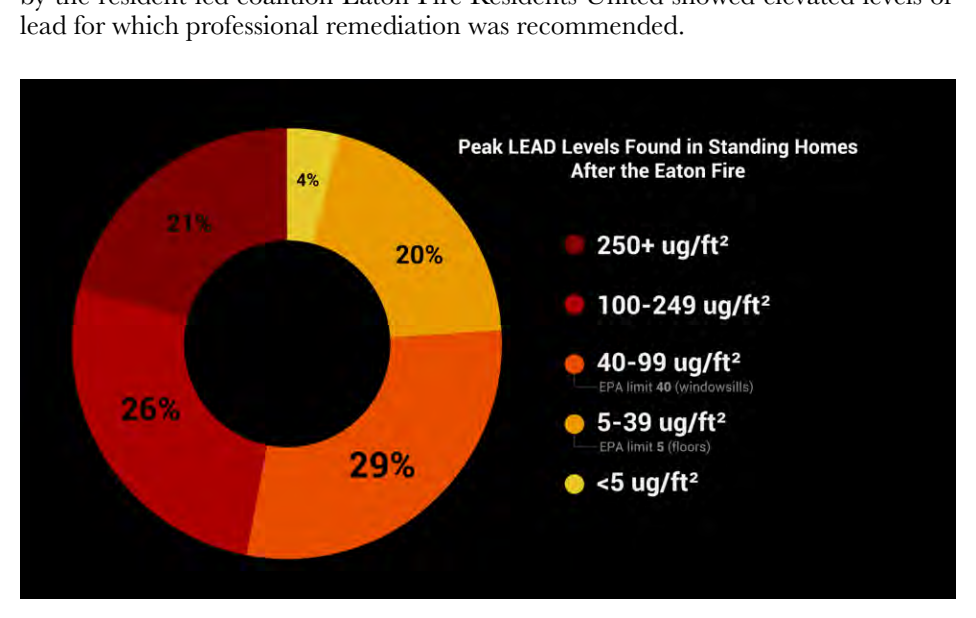
lead for which professional remediation was recommended.
Another resident-led organization, the Eaton Fire Survivors Network, submitted hundreds of testimonials to the insurance commissioner describing State Farm’s failure to meet its claims obligations to policyholders after the fires. Of the 51 smoke damage testimonials included, every single one cites problems with the company refusing or underpaying claims for testing and remediation.
And a survey recently conducted (opens in new tab) by the New York Times of Eaton and Pacific Palisades fire survivors, with more than 500 responses, found “a majority of those whose homes were still standing reported that their insurance companies had declined to pay for testing.”

Put together, what emerges is a troubling portrait of area policyholders following the Eaton and Pacific Palisades Fires. Their homes are contaminated with toxins, and they are not receiving the claim payments they’re owed.
Getting insurance companies to pay for wildfire damage has become a major problem for policyholders. Last decade, almost 40 percent of claims related to California wildfires were underpaid, according to a 2023 study (opens in new tab) by the Federal Reserve Bank of Philadelphia. The authors estimate homeowners receive on average $200,000 to $300,000 less than what they’re legally due. Insurance companies bank on many policyholders being unwilling or unable to sustain a long negotiation with their insurance company.
But claim underpayment is also about what insurance companies are flat out declining to pay. Smoke damage in particular has become an issue, often causing more trouble than a total loss. California law requires insurance companies to offer fire coverage equal or better to that of the state’s standard policy, (opens in new tab) which does not exclude smoke or “nonpermanent damage.” California law also states that insurers pay property owners for “all loss by fire.” (opens in new tab) And court decisions (opens in new tab) in California and other states have determined that smoke damage is an inseparable aspect of fire damage. Despite this, as thousands of policyholders navigate the home insurance claims process in California following the Eaton and Palisades fires, many are finding out that the damage wrought on their still standing homes by smoke and heat isn’t being paid for.
Insurers continue to deploy all sorts of methods to lower payouts, delay payment or flat out deny claims. Insurers often claim smoke can’t reach enclosed spaces, like closets. Even if your home smells like soot and ash, and if toxins show up in a report, it’s not considered damage by the California FAIR Plan and, increasingly, by many providers.
The following is a tip guide for policyholders on getting your smoke damage claims paid from those who know best: those who have gone through it. Fire survivors and professionals who help restore homes advise how to navigate insurance industry minefields regarding smoke damage, while exposing common home insurance industry tactics to deny consumers the rights they were promised.
10 Tips for Getting Your Smoke Damage Claims Paid
1.Test for Toxins 2.Know What Tests Miss 3.Walk the Loss with the Insurance Adjuster 4.Smoke Damage is Fire Damage 5.Push Back on Cosmetic Insurance Fixes 6.Know Your Policy 7.Make a Record!
8.Persistence Pays Off 9.Know Your Legal Rights 10.Take Collective Action Don’t Rush: Test for Toxins Before Cleaning
“If I had just taken that $26,000 check and called it a day, I’d probably be back in my house, but I wouldn’t know of the dangers that are still in that house.”
- STATE FARM POLICYHOLDER
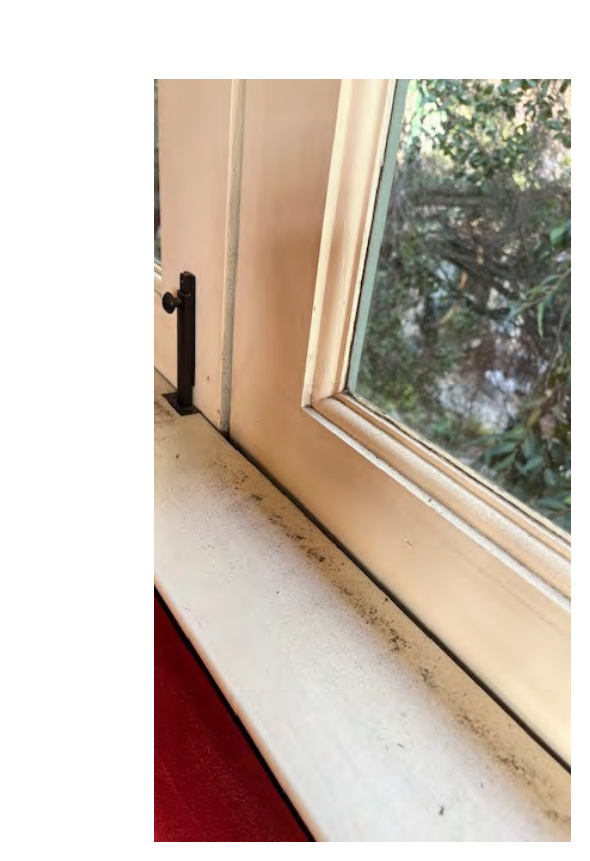
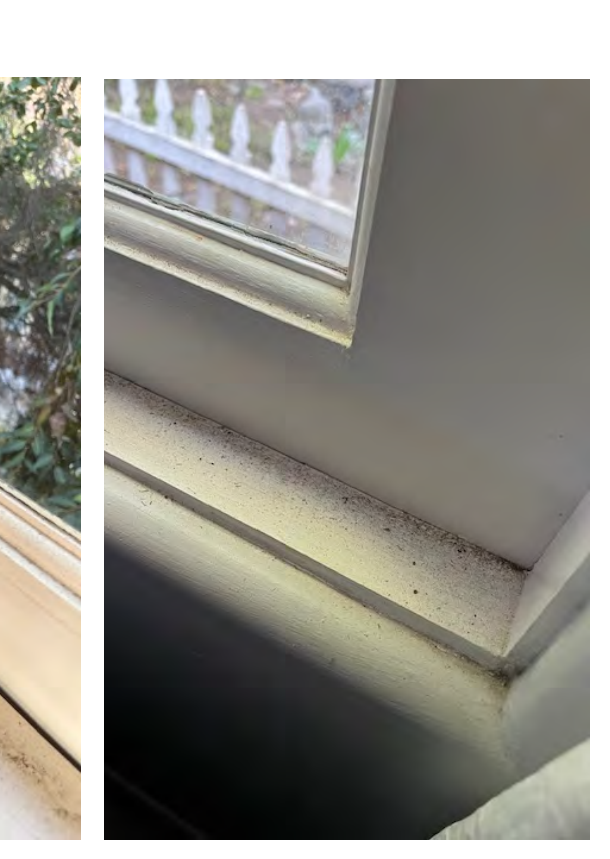
After the Eaton Fire tore through the foothills of Angeles National Forest, Wendy Davis’ Sierra Madre home was still standing, but inside it rained soot and ash. Meanwhile, State Farm—her insurance provider—trapped Davis inside a customer service loop. She kept getting reassigned adjusters, who assess damage on behalf of an insurance company. New adjusters would arbitrarily appear on her State Farm app, but it would be a month after the fire before someone from State Farm came
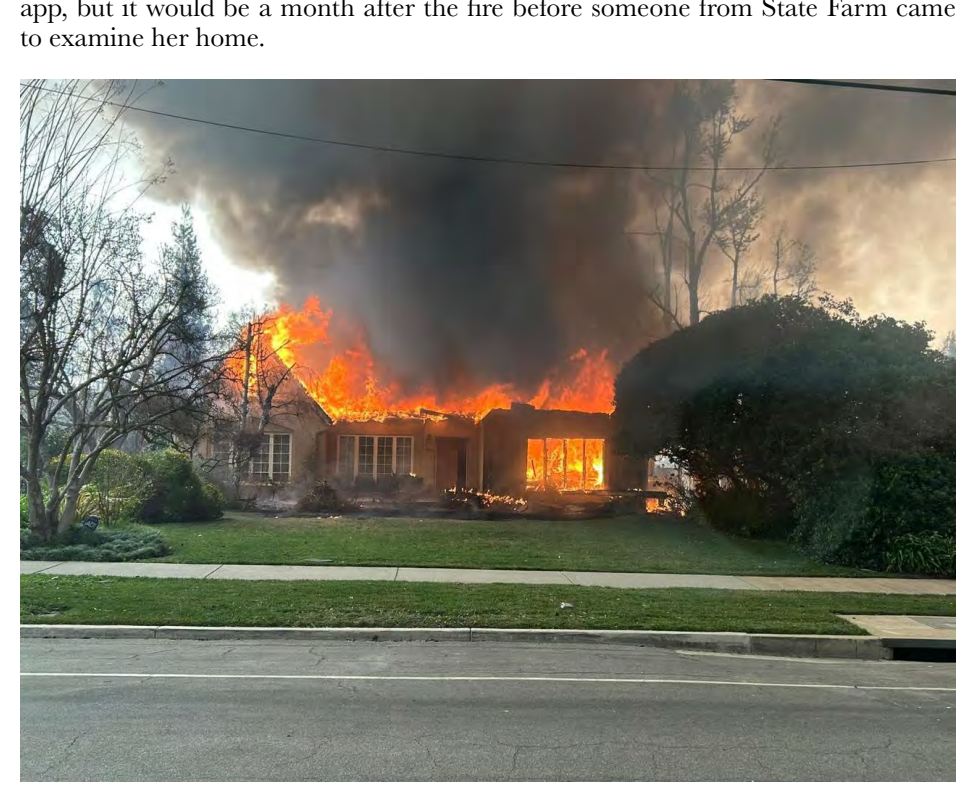
to examine her home.
So Davis took matters into her own hands, and hired an industrial hygienist to test for toxins inside the home. It was a good thing she did. The results showed her home contained asbestos, according to Davis.
But Davis only learned of the asbestos later. Before she got her test results State Farm sent out Servpro, a contractor hired to assess damages of the home. However, it did not test for asbestos, said Davis. In fact, it did no testing whatsoever.
“The testing company added in the asbestos, and thank God they did,” said Davis. “I wouldn’t have known.”
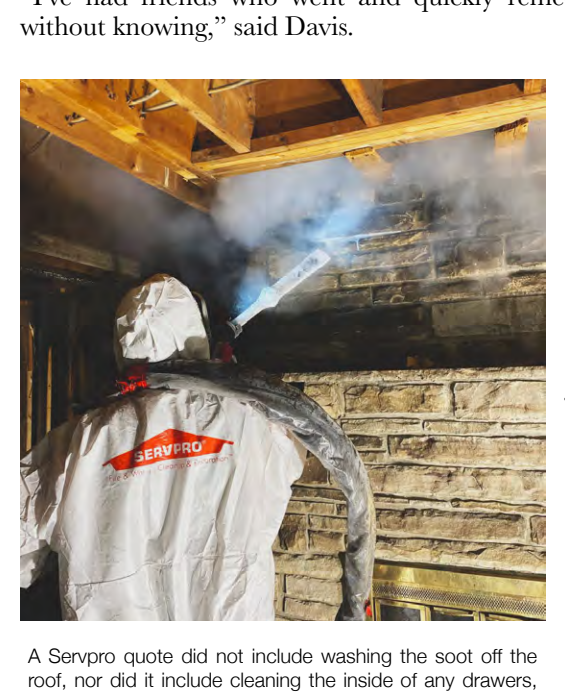
State Farm okayed the Servpro report, based on a superficial inspection, and cut a check for $26,000, way under the quotes Davis received from other remediation companies. Even worse, the adjuster possessed Davis’ report indicating asbestos, and ignored it, according to Davis. The Servpro quote recommended insulation replacement, wiping down walls, ceilings, floors, and HEPA vacuuming all horizontal surfaces, said Davis. But it did not include washing the soot off the roof, nor did it include cleaning the inside of any drawers, cupboards, or closets, said Davis. The more comprehensive and no-nonsense private quotes she received were $72,000 for structural remediation from BluSky, and $82,000 for contents restoration from Archive, according to Davis.
Archive took all Davis’ contents out of the house to clean at their facility—her clothes, dishes, furniture, rugs, etc. BluSky, meanwhile, cleaned her actual home, opening drawers and cleaning them with a HEPA vacuum. That was not part of Servpro’s estimate, said Davis.
“Servpro would have wiped down the outside of the drawer, but the inside of the drawer would have been untouched and uncleaned,” said Davis.
“If I had just taken that $26,000 check and called it a day, I’d probably be back in my house, but I wouldn’t know of the dangers that are still in that house,” said Davis.
Cleaning protocols should vary based on the damage to the home, and policyholders should not assume those proposed by their insurance company are sufficient.
Policyholders might think an insurance company’s remediation quote is based on test results, but they may only be documents indicating what insurers are willing to pay based on a superficial inspection. In reality, many insurance plans do not pay
The Servpro quote recommended insulation replacement, wiping down walls, ceilings, floors, and HEPA vacuuming all horizontal surfaces, said Davis. But it did not include washing the soot off the roof, nor did it include cleaning the inside of any drawers, cupboards, or closets, said Davis. The more comprehensive and no-nonsense private quotes she received
for the testing of homes damaged by smoke. Instead, they skip over that part entirely and simply provide things like a deodorizer that merely covers the smell of the smoke while the chemical residue lingers unabated.
“I’ve had friends who went and quickly remediated everything without testing,
without knowing,” said Davis.
If possible, it is worth paying out of pocket for an industrial hygienist to find out what kind of toxins are in your home in order to protect yourself, use as leverage for a claim, or for potential litigation.
“Test, bottom line. Test thoroughly,” urged Dawn Bolstad- Johnson, an industrial hygienist for over 25 years who wrote the book “Exposed,” about data collected after fires.
Bolstad-Johnson recommends testing for toxic heavy metals such as cadmium, chromium, lead, cobalt, lithium, and arsenic, but also cyanide and chloride anions.
Exposure to these toxins can lead to cancer and neurological issues.
“The lithium and the lead and the cadmium and chromium are probably more critical than arsenic,” advised Bolstad-Johnson.
“We’re testing for total cyanide in wallboard and yoga mats and baby car seats and mattresses, bolster pillows, and we’re finding it everywhere,” she said. Kelsey Szamet, whose Altadena home suffered severe smoke damage, advised policyholders to be wary of how insurers diagnose damage, as many overlook hazardous toxins such as asbestos and arsenic. Like Davis, Szamet had to pay out of pocket to test for toxins in her home.
“(State Farm) never once offered to send someone in,” said Szamet.
What came back was disturbing.
“Very high levels of lead in many rooms. We also have noticeable arsenic and chromium,” said Szamet.
There was no asbestos, but the levels of lead were much higher than the EPA limit for exposure, according to Szamet.
“So our house is what I would definitely consider in the heavy category.” Instead, a Servpro employee came to Szamet’s house for about 15 minutes and took a few pictures without going into the basement or attic, according to Szamet. “We said, ‘Our basement is inundated with ash, and your person didn’t even go into the basement. Our garage is inundated. Your person didn’t even go into the garage.’” “It’s all under the same roof, and that air that you’re breathing is the same air that’s in the attic,” said Bolstad-Johnson.
State Farm sent Szamet a $39,000 estimate to repair damages, much lower than their independent quotes.
Pacific Palisades resident Tim McCune also advised paying for independent testing, because his California FAIR Plan policy, which was ostensibly created to give people in fire-prone areas insurance coverage, didn’t pay for it. McCune had to pay $3,000 out of pocket for just testing, but it confirmed high levels of soot and ash that justified professional remediation.
He said an insurance field adjuster came to his home but didn’t intend on checking the attic, a spot where soot and ash is usually concentrated.
“I said, ‘Hey, do you wanna check out the attic?’ He’s like, ‘no,’” said McCune. After McCune got him a ladder, he looked inside, but didn’t take any pictures, according to McCune.
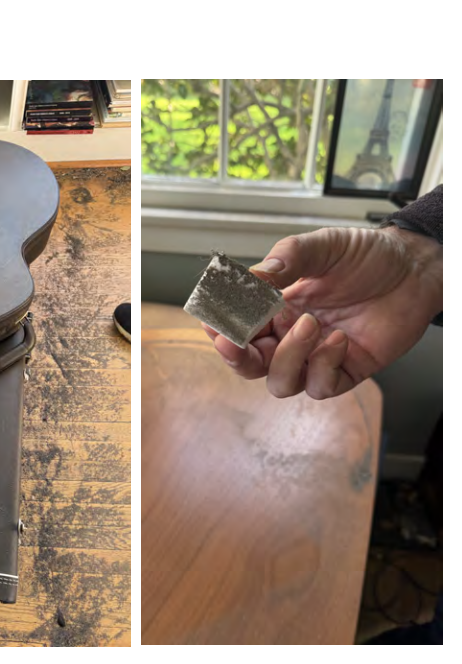
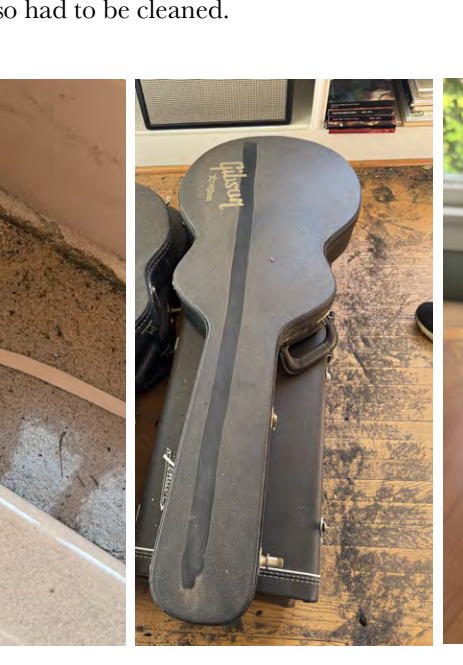
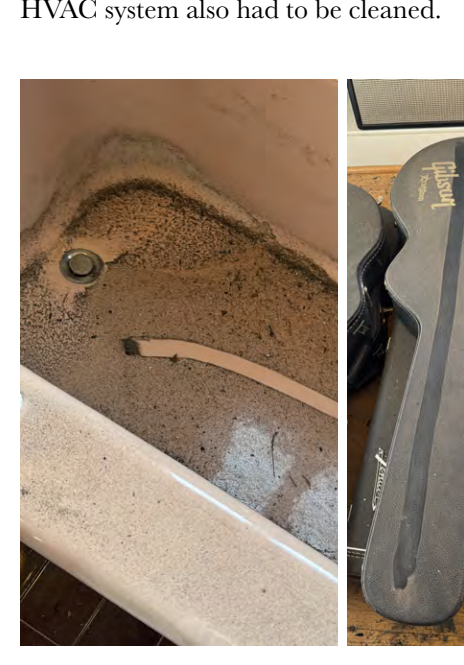
“I got pictures where you can see an inch thick of ash on the insulation in the attic,” said McCune.
Instead, the adjuster’s approach seemed to be cosmetic. If there were black footprints on the couch, they would write it off to be cleaned.
“They’re very focused on what is visible and what can be smelled, and nothing else,” said McCune. “So they also said, ‘Okay, the house smells like smoke, so we’ll pay for you guys to do a deodorization process with hydroxyl, and run some air scrubbers in there.’” The FAIR Plan also paid to pressure wash the walls and add a coat of paint, but no testing was done whatsoever, according to McCune. Minus his $10,000 deductible, FAIR Plan cut him a check for $36,000.
“The science is all of a sudden not being followed anymore,” said Bolstad- Johnson.
But to test and clean everything properly in McCune’s home, it was going to cost about $170,000, and that doesn’t include replacing contents, according to McCune. His private quote recommended deep cleaning of nearly each room to remove ash and smoke residue, using HEPA vacuuming and manual wiping.
Deodorizers such as sprays and ozone generators were recommended to eliminate lingering smoke. And contaminated carpet and insulation would be removed. The HVAC system also had to be cleaned.
Know What Tests Miss It’s not just emissions from trees that are the issue. The industrial hygienist Bolstad- Johnson said there is a lot that the insurance companies who do test end up missing, such as all the toxic residue left by the synthetic and electronic hardware that burns in a home. Solar panels, computer devices, and lithium batteries exposed to extreme heat all pose health (opens in new tab) risks. “That’s showing up in almost every single home because of all the same batteries that we have,” said Bolstad-Johnson.
Insurance-approved tests are often inadequate for post-fire smoke contamination, according to Bolstad-Johnson. Testing methods often ordered, like CAM 17 for environmental testing in California, or RCRA 8 panels for federal testing, are designed for soil contamination and not indoor dust, leading to false negatives, according to Bolstad-Johnson.
To make sure testing is done thoroughly, homeowners should hire a qualified industrial hygienist experienced in post-fire indoor testing, and not just someone using basic lab packages, said Bolstad-Johnson. Testing should follow scientific standards like those in the National Academies’ report on fire chemistry. Essential
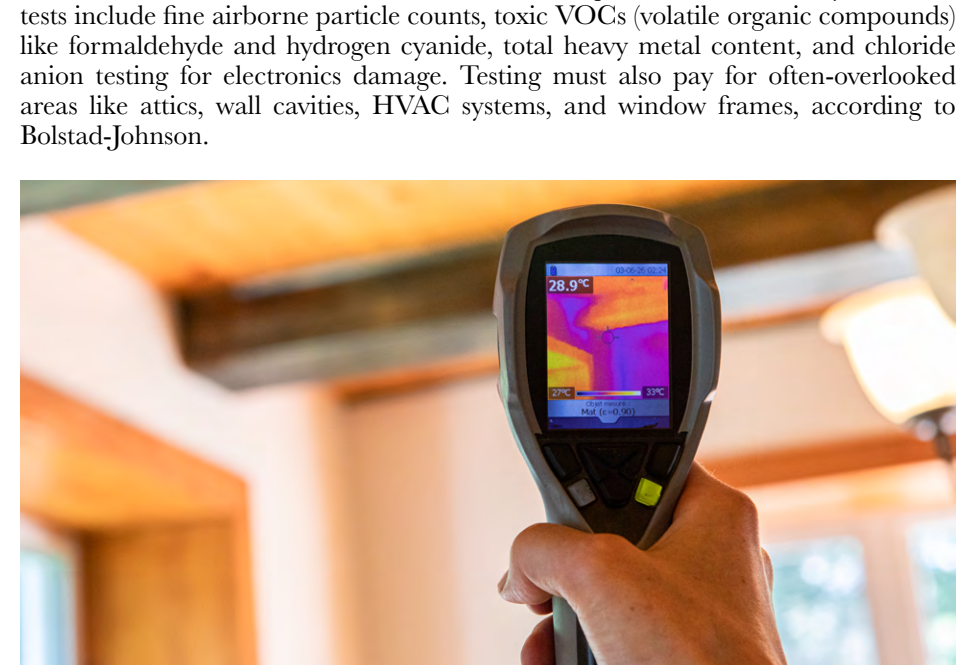
tests include fine airborne particle counts, toxic VOCs (volatile organic compounds) like formaldehyde and hydrogen cyanide, total heavy metal content, and chloride anion testing for electronics damage. Testing must also pay for often-overlooked areas like attics, wall cavities, HVAC systems, and window frames, according to Bolstad-Johnson.
Walk the Loss with the Insurance Adjuster
“Getting the right adjuster seems to be the key.”
- DENISE SZE, PUBLIC ADJUSTER
When insurance field adjusters like Servpro inspect a home, it’s important to walk through the property with them to make sure they don’t overlook any damage that will need to be paid.
“I insist on walking every loss,” said Denise Sze, a public adjuster and president of the Pacific Coast Association of Public Insurance Adjusters. As a public adjuster, she handles claims with insurance companies on behalf of policyholders. “The insurance adjusters were telling me, ‘I’m not supposed to go in the attic,’” recalls Sze. “I’m like, ‘You’re going into the attic. If I’m gonna go into the attic, you’re going to the attic. And we’re gonna get photos.”
Sze often points out damage that adjusters miss or avoid, and often reframes cleaning as damage in her estimates. For example, she will write up repainting and sealing a wall rather than an insurance adjuster offering to simply clean it. She remembers one FAIR Plan adjuster who did not take photos of direct burns. “You could tell she was not looking to pay everything out,” said Sze.
There was a burn along the house where it was very clear that all the irrigation lines were melted, said Sze.
“And she kinda just walked past it,” said Sze, who pointed out that the damage should be recorded as a plumbing estimate.
“And she actually turned to me and said, ‘You know what? You don’t need to be so aggressive and so mean. And my insured looked at me because I’m kinda known in the industry as not that person.”
But there are good adjusters. After an Allstate adjuster wrote up a very low estimate for an Eaton Fire home that was a total loss, the homeowner was assigned a new adjuster.
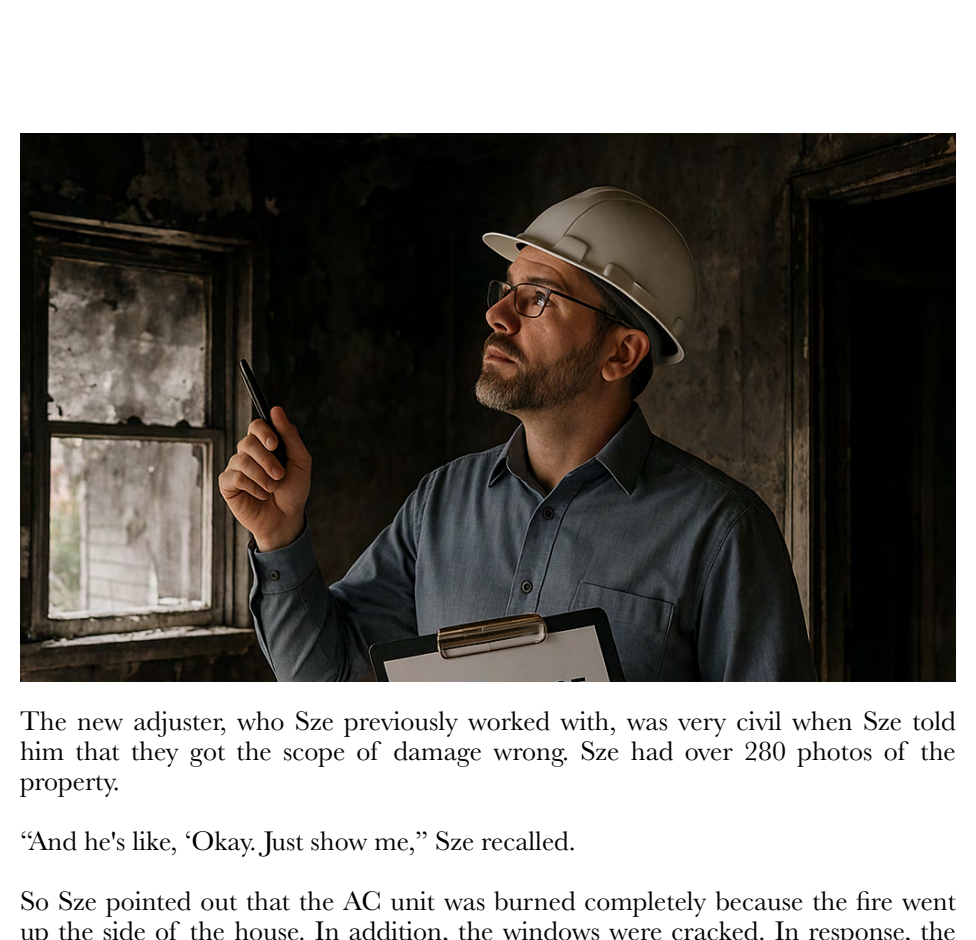
The new adjuster, who Sze previously worked with, was very civil when Sze told him that they got the scope of damage wrong. Sze had over 280 photos of the property.
“And he’s like, ‘Okay. Just show me,” Sze recalled.
So Sze pointed out that the AC unit was burned completely because the fire went up the side of the house. In addition, the windows were cracked. In response, the new adjuster did get the claim paid, said Sze.
“Getting the right adjuster seems to be the key,” said Sze.
Smoke Damage is Fire Damage
“The truth is that what you’re really talking about is not smoke. You’re talking about what’s left after smoke is gone, and that’s chemicals and contamination.”
- DYLAN SCHAFFER, ATTORNEY
For over 100 years, insurance companies treated both fire and smoke damage as inseparable—and a covered loss.
However as smoke damage claims grow with the increase in size and damage from wildfires, they are cutting corners and changing tactics to pay out less and less, whittling away at the benefits they owe consumers. The California FAIR Plan has taken it the farthest, redefining what smoke damage means.
“FAIR Plan just said, ‘We’re not doing that anymore,’” said Dylan Schaffer, an attorney who has sued insurance companies for over 25 years.
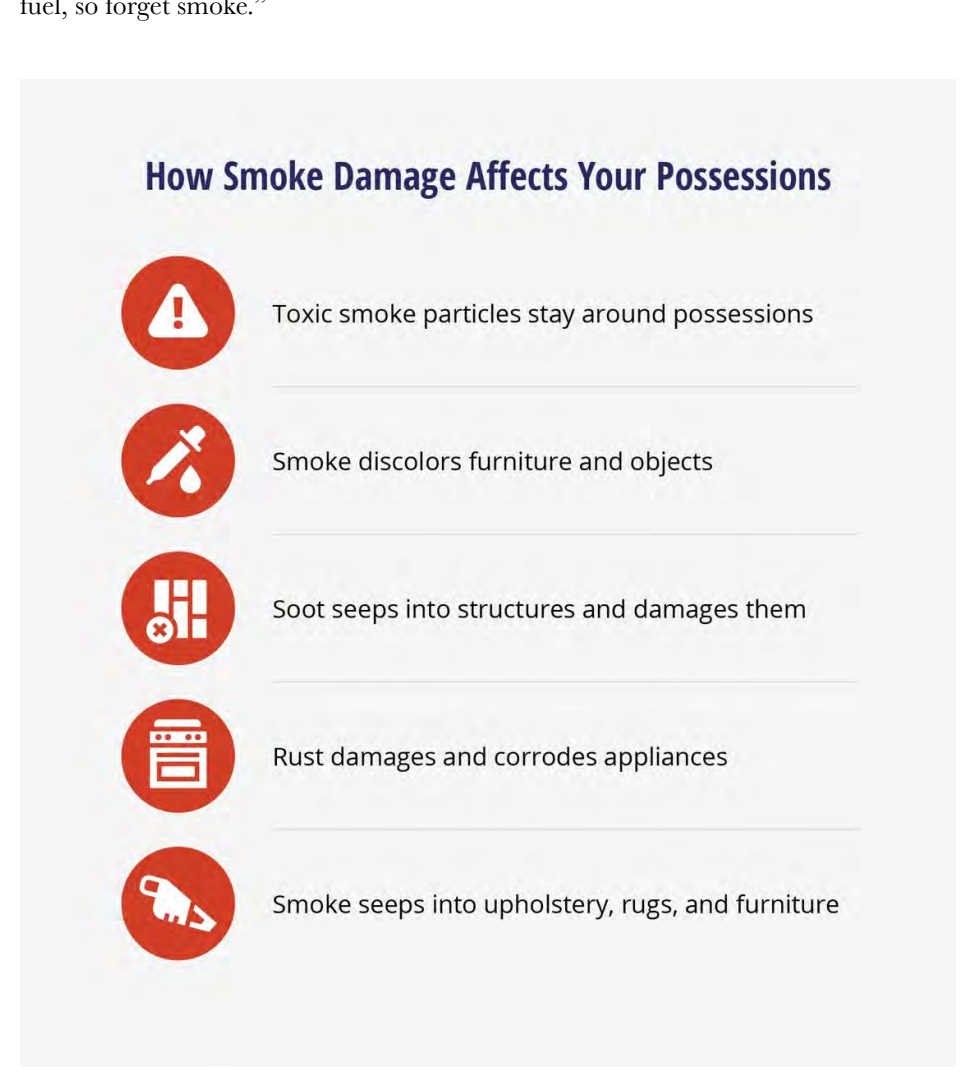
But there is no smoke damage without fire damage. Smoke damage is fire damage. The two are inseparable. So Schaffer advises policyholders stop discussing property damage only in terms of the word “smoke”. Instead, he frames smoke damage as involving thermal damage, (from heat) and chemical/contamination damage (from fuel).
“This idea of smoke is a distraction,” said Schaffer. “And I realize that when you refer to this, you kind of have to say ‘smoke.’ But the truth is that what you’re really talking about is not smoke. You’re talking about what’s left after smoke is gone, and that’s chemicals and contamination.”
What insurance companies are doing is similar to when people shop around for an event space to throw a party. Once you call the party a wedding, prices skyrocket. Hearing the word “smoke” can prompt your insurance company to lowball your claim.
Schaffer stresses that chemical contamination is real damage that requires professional cleaning, decontamination, or replacement. It’s not cosmetic. “The reason I distinguish between chemicals and contamination is because chemicals impact the functionality of building components,” said Schaffer. “So you have highly acidic combustion byproducts. They get into window seals and roofs, under underlayment and electronic systems, and they deteriorate them. It’s just fuel, so forget smoke.”
Push Back on Cosmetic Insurance Fixes
“What Servpro was recommending will not make your house safe.”
- S F
Policyholders should demand cleaning and replacement based on contamination levels. Cosmetic surface cleaning is usually not enough, said Schaffer, the attorney. Szamet, the Altadena resident whose home suffered severe smoke damage, is adamant that fire victims shouldn’t let insurers like State Farm take control of cleaning damaged homes. For one, without established testing, it’s unknown the extent of damage a home has suffered.
Szamet’s home test turned up arsenic, lead and chromium, but State Farm only paid for a HEPA filter and wipe down. Meanwhile, the remediation quote Szamet received said her floorboards had to be refinished and resealed due to lead and ash between them. Her drywall likely needs replacing, and the entire house required repainting with a special paint to seal the lead.
“What Servpro was recommending will not make your house safe,” contended Szamet.
“You can’t clean away what is absorbed into drywall and couches and mattresses and those kinds of things,” said Bolstad-Johnson, the industrial hygienist. “They all become a reservoir.”
According to a recently published study on remediating homes (opens in new tab) from smoke contamination, it compared three methods: opening windows, installing purifiers, and cleaning a home with a high-powered vacuum cleaner.
“It turned out that doing the cleaning actually paid off,” said Dr. Gina Solomon, who studies environmental health issues as Chief of the Division of Occupational, Environmental and Climate Medicine at the University of San Francisco. Once air filters and purifiers were removed, the VOCs would return, according to the study. And opening windows was not effective either. The study showed that thorough cleaning, using vacuums and mops, removed the settled VOCS more effectively.
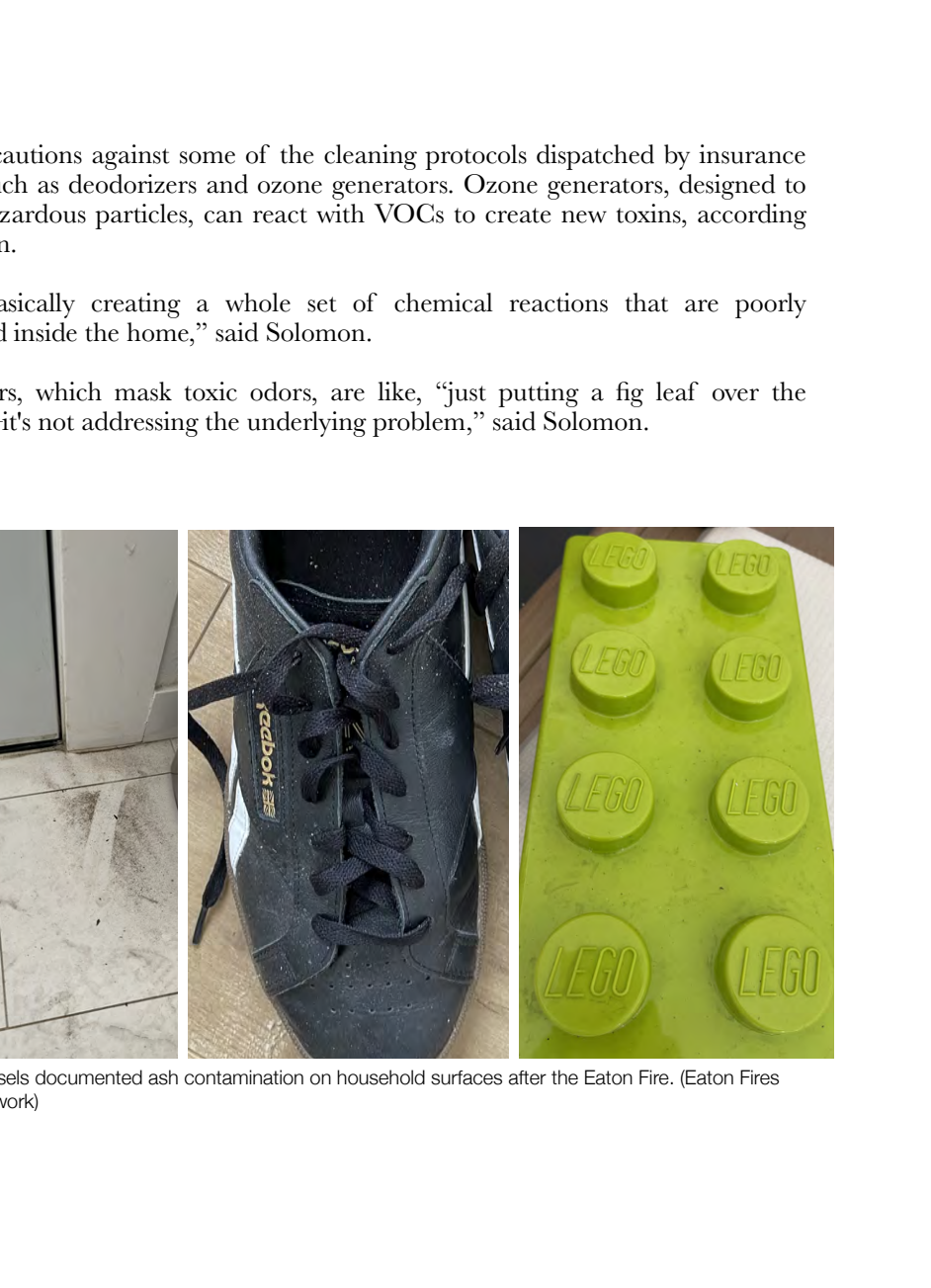
Solomon cautions against some of the cleaning protocols dispatched by insurance policies, such as deodorizers and ozone generators. Ozone generators, designed to remove hazardous particles, can react with VOCs to create new toxins, according to Solomon.
“You’re basically creating a whole set of chemical reactions that are poorly understood inside the home,” said Solomon.
Deodorizers, which mask toxic odors, are like, “just putting a fig leaf over the problem—it’s not addressing the underlying problem,” said Solomon.

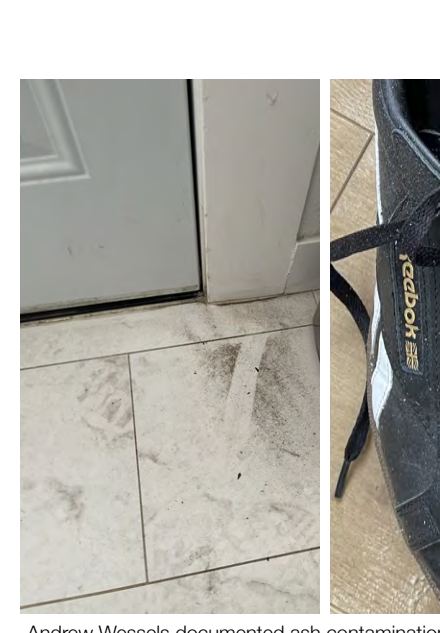
Know Your Policy Damage to your home is very stressful, and even knowing who insures you and the details of the policy can be difficult to find in the wake of a catastrophe. Ask your insurance company for a copy of your policy right away, so you know the extent of your coverage. Need help finding your policy? Property owners in a declared disaster area can get help through the California Department of Insurance, which offers a free insurance policy locator. (opens in new tab) The department will forward your information to insurance companies licensed in California, who will see if the property is insured, and then contact you directly about the policy.
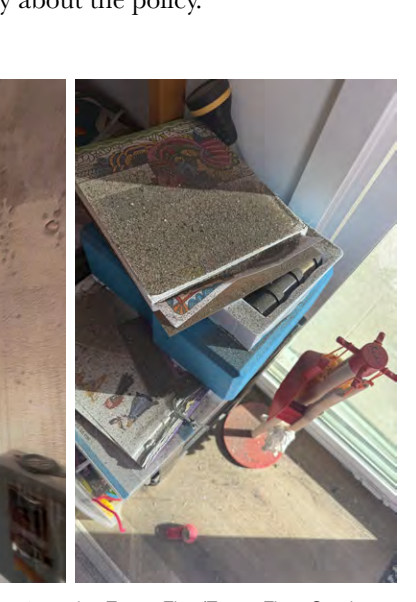
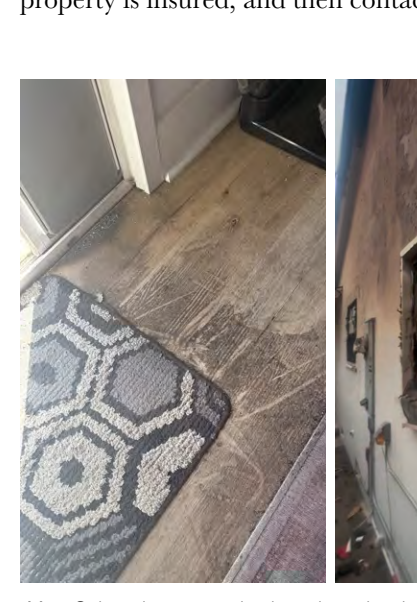
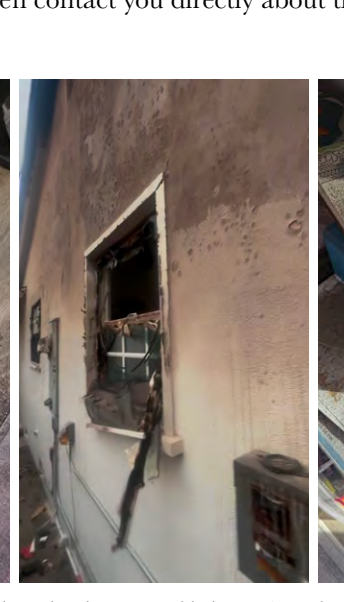
Make a Record!
Document everything.
“You have to document every email, every phone call because they are not documenting it,” said Szamet.
That’s especially important because policyholders have reported being assigned upwards of 4 or 5 different adjusters, disrupting the claims process.
Nicole Anderson, who lost her Santa Cruz home due to the Complex Fire in 2020, held onto her receipts, allowing her to recover 70 percent of her personal property.
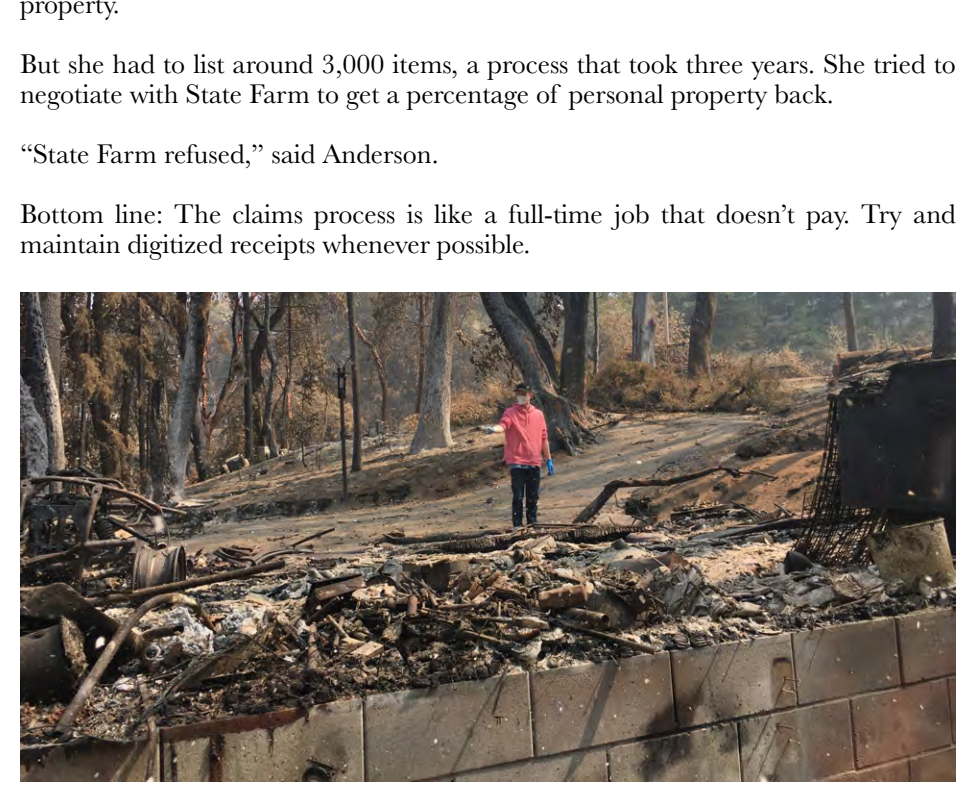
But she had to list around 3,000 items, a process that took three years. She tried to negotiate with State Farm to get a percentage of personal property back. “State Farm refused,” said Anderson.
Bottom line: The claims process is like a full-time job that doesn’t pay. Try and maintain digitized receipts whenever possible.
Persistence Pays
“It’s perseverance. It’s persistence.”
- STATE FARM POLICYHOLDER
Refusing to back down worked out in the end for Wendy Davis, the Sierra Madre resident whose smoke-damaged home was lowballed by State Farm. State Farm quoted her $44,000 based on a Servpro estimate that did not account for the asbestos in her home. After subtracting her advance and deductible, she was paid out merely $26,000.
Davis still would need to shell out $72,000 to remediate her home and another $82,000 to replace her contents. However, State Farm said it would not pay her claims, despite her policy stating that it does pay for pollutant damage, said Davis. “I interpreted the policy to say that a hygienist was paid for if the pollutants and contaminants were caused by a covered loss,” said Davis. “Fire and smoke are covered losses. And the policy’s poorly written or intentionally written with lots of double negatives, but it still ends up saying ‘We will pay for contaminants that come into your home because of smoke and fire.’” Seeing no progress with State Farm, which cycled through five adjusters for Davis, Davis turned to filing a dead-end complaint with the Department of Insurance. Unsurprisingly, the Department misinterpreted the policy, according to Davis. So forget picking up the phone to get things done. Davis got into her car and drove to a workshop where she confronted a State Farm representative about her asbestos remediation denial of claim.
“And she went away and talked to supposedly the head of the entire Southern California State Farm recovery operation,” said Davis. “And she said, ‘We’ll pay for the cleanup.’” It still took a couple of aggressive phone calls, but Davis said she got State Farm to pay for remediation, the contents of her home, as well as housing and living expenses.

Davis’ advice: Don’t take no for an answer.
“It’s perseverance. It’s persistence,” said Davis.
McCune, the Palisades resident whose home suffered severe smoke damage and was lowballed by the FAIR Plan, also benefitted from attending workshops where he could talk to FAIR Plan representatives in person.
“Attending the Department of Insurance workshops is far and away the most important path that we found so far because we’ve managed to get five months’ worth of rent paid for,” said McCune. He met with supervisors from the FAIR Plan to get what they call Fair Rental Value, which pays displaced homeowners their equivalent of what their home would have rented for to a tenant. McCune was having trouble getting someone from the FAIR Plan on the phone to pay for it even though his policy covered it.
“That’s been the easiest thing out of all of this,” said McCune.
Know Your Legal Rights According to attorneys who litigate against insurance companies, your insurance company has obligations that protect you in these ways:
- Act in Good Faith: They must give your interests as much consideration as their own (opens in new tab). That means no lowballing, stalling or denying claims without adequate justification.
- Fair and Thorough Investigations: They must investigate all aspects of your claim, not just those that benefit the insurer. All fire damage, including that from smoke and ash, must be considered.
- Full Disclosure of Your Rights: You’re entitled to clear communication about your policy and your rights as a policyholder via written documentation. In declared state emergencies, the following relief is triggered.
- Expenses: An insurer must give a policyholder four months (opens in new tab) of what are called Additional Living Expenses (ALE) if the home is inhabitable. It is money upfront and you shouldn’t have to ask for this, but it is dependent on the policy. This pays for food, rent and relocation costs.
- Timely Payments: You’re owed what your policy promises, and payments should be prompt. For collecting full replacement cost, it’s 36 months (opens in new tab) to collect the full amount required to rebuild or replace your home.
- Rebuild Extensions: If circumstances happen beyond your control, such as permitting delays or supply chain disruptions, you can ask for an extension on rebuilding (opens in new tab).
- Negotiate: If you haven’t used all money for coverage C and D under your policy, then you can try negotiating with the insurance company. Coverage C is the bucket of personal property claims you can draw from, the stuff inside your home. Coverage D entails payment for your living expenses. Use that to your benefit, as companies want to close claims and adjusters are judged on that.
- Mandatory Renewal: If you live in or next to the fire perimeter, insurance companies must renew your policy for at least one year after a declared emergency. (opens in new tab) That protection extends to two years for a home that is a total loss due to the disaster.
- Primary Point of Contact: If you’ve had three or more claims adjusters within six months, you are entitled to a primary point of contact with someone you can directly communicate with, and who will handle your claim until it is closed. The insurer at this point must also provide you with a written status report including a summary of any decisions or actions that are substantially related to the disposition of a claim.
Take Collective Action Harness the power of community mobilization by joining group chats, online organizing channels, and in-person community gatherings of wildfire victims and

policyholders.
“Number one, stay plugged into the network and make sure you’re talking to your friends and neighbors, and make sure you understand what to expect,” said McCune, the Palisades resident and FAIR Plan policyholder.
“That’s far and away the most important thing.”
One example, the Eaton Fire Survivors Network, began as a pre-fire community pickleball group that transformed into a 2500-member grassroots force. When they realized that one private insurance company—State Farm— dominated community complaints about claims delays, denials and underpayments, they took action. With a national press conference, letter to the insurance commissioner with over 300 firsthand survivor accounts, and champions in the legislature and community, their case exploded across print and electronic media (opens in new tab). The Insurance Commissioner was forced to launch an investigation into the company’s conduct.
“Insurance companies depend on us being isolated. They count on survivors feeling overwhelmed and giving up before they can fight back. But by educating ourselves, standing together, and taking collective action, we can hold insurers and regulators accountable to the laws that are supposed to protect us,” said Joy Chen of the Eaton Fire Survivors Network.
Visit their website to join survivors to hold insurers accountable: https://www.efsurvivors.net/hold-insurers-accountable-state-farm-lara (opens in new tab)