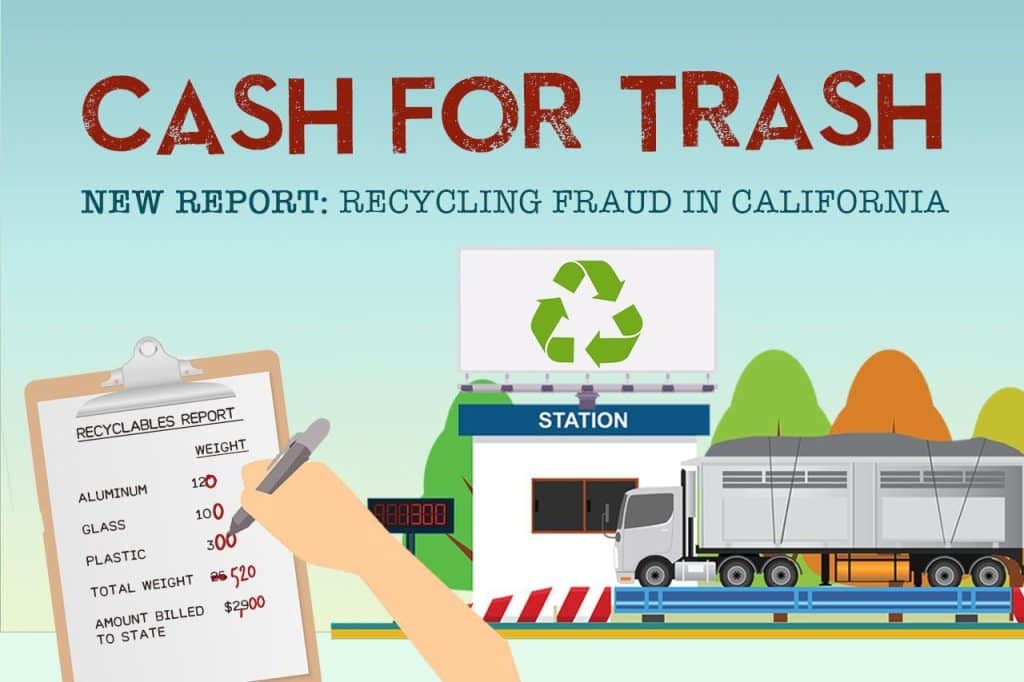
EXECUTIVE SUMMARY A Consumer Watchdog investigation into fraud under California’s bottle deposit law finds fraud is rampant in the system – potentially costing consumers hundreds of millions of dollars –in nickel and dime deposits stolen in fraudulent bottle and can refunds.
Experts and insiders point to fraud rings that consist of crooked recycling centers and recycling processors as the source, along with an antiquated paper system of checks and balances run by the state that is easily fooled because it has not been fully digitized. Fraud occurs when deposit containers are recycled more than once; when recycling centers and processors that buy materials from them for resale fudge the record-keeping, including the weight of loads used to calculate state payments; when out-of-state deposit containers on which no deposit was ever paid are redeemed; and when California non-deposit beverage containers are passed off as deposit beverages for state deposit refunds.
California’s bottle deposit program is run largely on a recycler honor system to claim payments from the state for bottle and can redemption. This reimbursement system uses state-set formulas easily manipulated by unscrupulous recyclers and waste haulers with little sophisticated scrutiny by regulators. Not a single other bottle deposit system in the continental United States emulates and copies California’s. Instead, other bottle deposit systems put the responsibility onto the beverage industry to run bottle deposit programs and give them a stake in it. This helps to eliminate fraud because beverage producers lose money if they allow it. Beverage consortiums in charge of bottle deposit programs use modern technology—such as Reverse Vending Machines or automated Bag Drop machines—at convenient redemption locations in or near big supermarkets and recycling centers to refund deposits. This technology increases consumer rates of return and screens for container deposit refund eligibility, cutting
fraud. Under SB 38, a bill introduced by Senator Bob Wieckowski, up for a vote next year,1 California would switch to such a model.
the rnia is n Califo Souther nsiders, dustry i ng to in Accordi “ er icent ep fraud.” of
Based on CalRecycle data analyzed and interviews with recycling experts, insiders, and former recycling executives, the bottle deposit system has been and continues to be easily exploited to defraud the state and consumers. No one knows how much fraud exists in the system precisely because of fraud’s very nature. Past estimates from investigations by the State Auditor and the Los Angeles Times show a range from $40 million up to $200 million dollars annually in deposit money stolen from the California beverage container recycling program. Experts and insiders2 report, however, fraud has grown significantly in recent years.
CalRecycle is working to address fraud, but its approach is largely seen as ineffectual. The department lacks budget resources, uses a data gathering system that does not require recycler submission of vital information that could help flag fraud and does not fully analyze data that could help pinpoint the need for investigation in specific counties.
While the statewide redemption rate is 58%, some hot spots have suspiciously high rates of redemption despite a deficit of takeback locations. On the Central Coast, the small county of San3 Benito shows an impossible redemption rate of 106%.
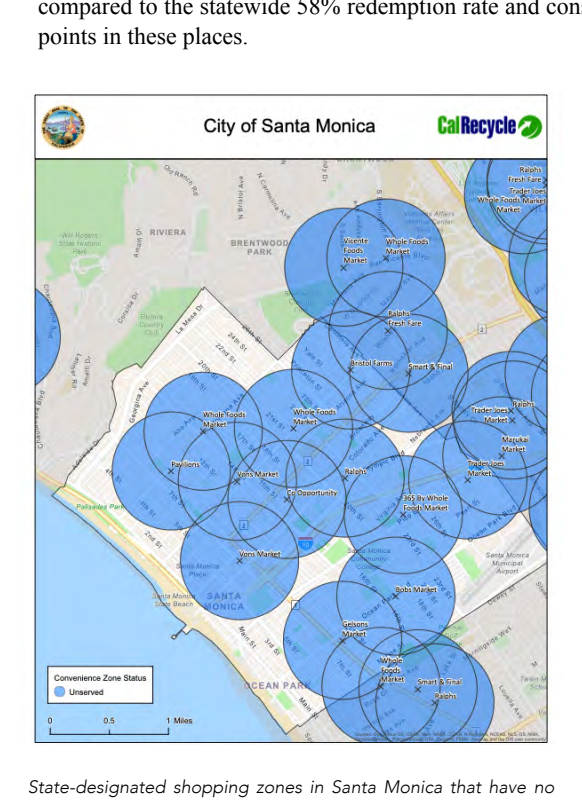
According to industry insiders, Southern California is the epicenter of fraud. Los Angeles County has a redemption rate of 84% even though Santa Monica and West Los Angeles have no recycling center West of the 405 freeway. A Consumer Watchdog investigation of 50 stores in the LA area, including in Santa Monica, obligated to take back containers where4 no recycling centers exist, found that two thirds of stores refuse redemption service. Whole areas of Los Angeles County are redemption deserts with too few to no recycling centers in Santa Monica, El Segundo, Manhattan Beach, Pasadena, Altadena, Alhambra, Cerritos, and Woodland Hills. It is highly unlikely that consumers turned away by retail stores in these areas are driving long distances to find redemption centers in better served areas.
Key Findings:
- Use of a weight-based formula to calculate state reimbursements of California Redemption Value (CRV) and other recycling subsidies, instead of single-counting containers via advanced technology, allows the system to be easily manipulated. The formula, as applied, relies on human estimation and the hand-written documentation of the weight of scrap that can easily be altered.
- Allowing recycling centers and the processors that buy containers from them for resale to use cash instead of checks or electronic transfers for financial transactions offers opportunities for tax evasion and the perpetuation of scams to defraud the state.
- The lack of state requirements for recyclers to submit underlying proof of material purchases and sales to CalRecycle’s website when billing for repayment of consumer deposits and other subsidies makes it easier for recyclers to avoid scrutiny.
- The lack of a state electronic tracking system requiring processors to report on a monthly basis the amount of inventory on hand and the amounts of CRV loads purchased from whom and sold to whom deprives regulators of an important tool to identify recyclers for investigation.
- The lack of Reverse Vending Machines and Bag Drop Machines capable of determining the eligibility of deposit containers for refunds help fraud to flourish.
- The easiest way to virtually eliminate fraud is to move to a producer responsibility system as outlined in SB 38, which fully digitizes the system, including scans on every can and bottle that can confirm their authenticity.
COMMON FRAUD TACTICS Importing non-CRV containers from out of state – Containers are brought in illegally from states and countries such as Arizona, Nevada, and Mexico for redemption by organizers of5 rackets. No CRV was paid by California consumers on the containers. Organizers sell bags of containers on the street to individuals who redeem the containers for the much higher CRV value at recycling centers. Recycling centers may not know the containers are from out of state because major soda brands, for example, will stamp multiple state deposit logos on all their containers sold in different bottle deposit states. Such scams can also be perpetrated by processors that collaborate with racket organizers and affiliated recycling centers under the cover of night with
materials moved in closed trucks.
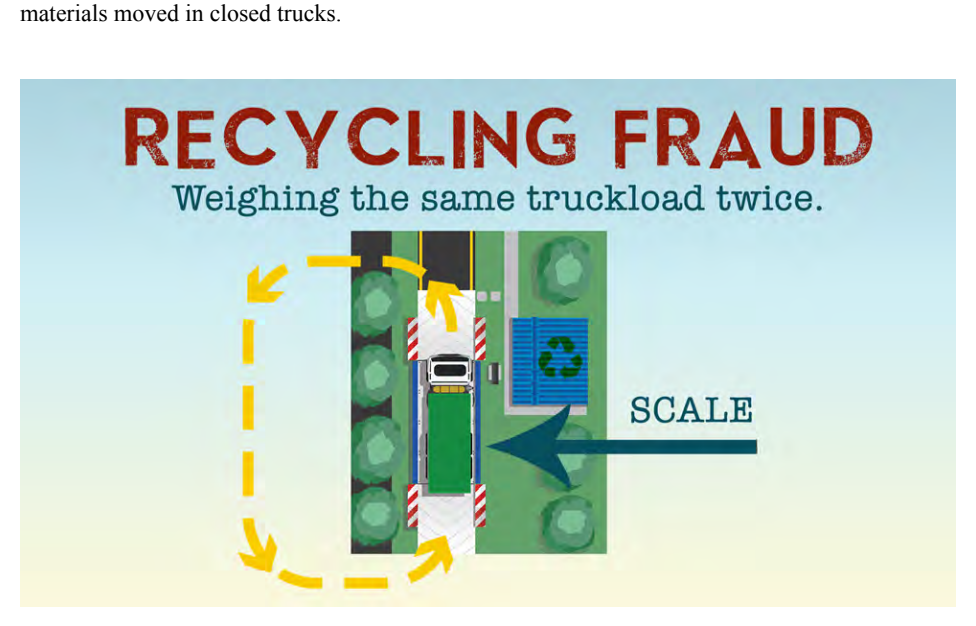
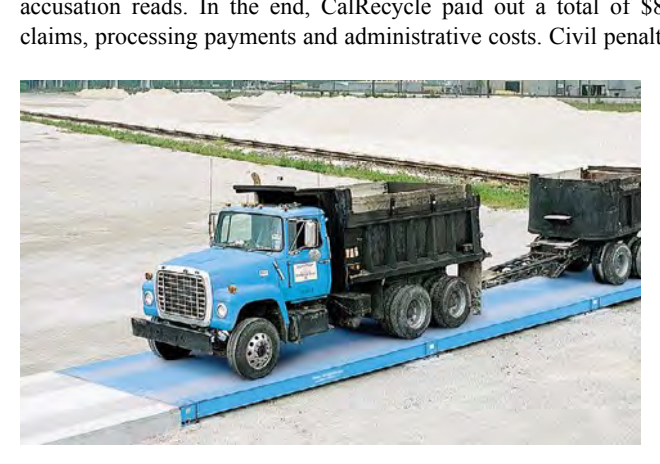
Weighing the same truck repeatedly – Processors, including waste haulers authorized to process deposit materials, can claim the CRV on the same containers more than once. Processors run a loaded truck over a weight scale for a second time, for example, and give the load a new serial number as if it is not the same load. If a processor also owns or is affiliated with recycling centers, information submitted to CalRecycle by both parties can match. Falsely reporting the source of containers to obtain higher payment – Waste haulers that are certified processors and own recycling centers can find fraudulent ways to be paid higher rates for deposit materials. Waste haulers and recycling centers are reimbursed CRV via state weight-based formulas that pay more for materials redeemed at recycling centers than from waste hauler curbside bins or drop off collection programs. According to the Los Angeles Times, in one case a former whistle-blowing supervisor at Recology in San Francisco alleged that workers made more than $1 million in fraudulent claims a year by pretending that bottles and cans were actually redeemed at Recology’s recycling center rather than collected from Recology’s commercial and6
residential customers.
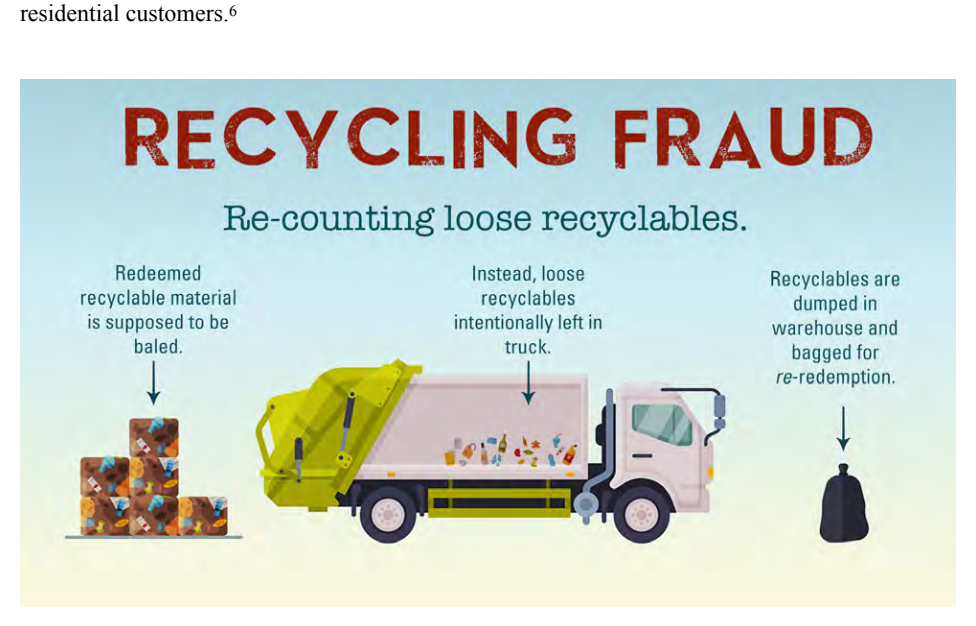
Recycling the same container repeatedly – Processors can buy loose material from recycling centers and instead of baling it, they can load it onto a roll-off truck, take it to a warehouse and make 70 to 99-pound bags of materials and arrange for crews to take them to affiliated recycling centers all over again. CalRecycle does not require customer transaction logs to be kept on loads of up to 99 pounds. The CRV money is claimed by the recycling centers via the same processors who run the same scam over and over again. Recycling centers selling material to processors may not know what is going on.
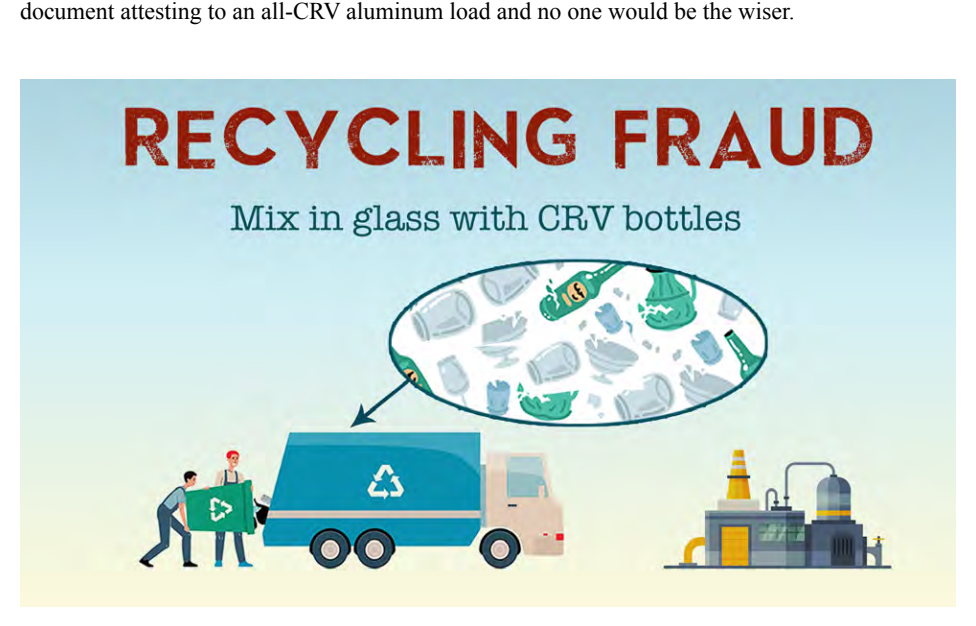
False documentation of “phantom” containers – Processors involved with recycling centers can concoct “phantom” containers that exist only on paper. The recycling centers dummy up weight tickets saying they bought the material and then submit claims for CRV and processing payments and the processors validate them and claim administrative fees. As long as there is a matching scale ticket from the processor to the recycling center, fraud is very difficult to prove. A CalRecycle request for verification that each load was actually shipped seldom happens. Padding the load with non-CRV containers – Recycling centers can buy non-CRV glass containers such as empty wine bottles or manufacturer rejects, break them up, and mix them in with CRV bottles. Then they write a weight ticket for all-CRV glass containers. Processors have also been known to offer higher than usual prices for such scrap to pad CRV loads. Under a CalRecycle formula, the processor can legally discount a load purchased from a recycling center for CRV based on their estimate of how much non-CRV material the load contains. The same can be done with aluminum cans by mixing in non-CRV metal cans, and with plastic by mixing in non-CRV plastic. Rarely do processors discount the loads.
Doctoring weight tickets – Recycling centers can doctor weight tickets by claiming additional weight that does not exist on their reports to CalRecycle in order to boost the amount of CRV reimbursement. There is a small, legally allowable maximum discrepancy of 2.5% between a recycling center’s load weight and the weight of that load at a processing facility. For example, a recycling center can report a load weighs 10,240 pounds, but at the processing facility the same
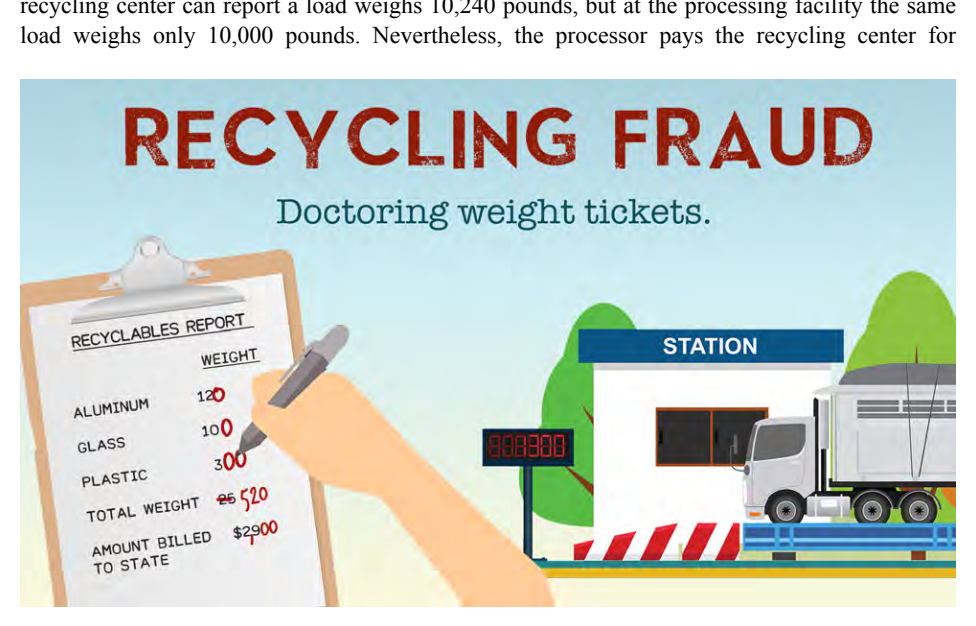
load weighs only 10,000 pounds. Nevertheless, the processor pays the recycling center for 10,240 pounds. The recycling center alerted to the discrepancy can dummy up manual weight tickets or doctor existing tickets to make up for the extra 240 pounds they claimed on each load in case of audit.
Mislabeling scrap as CRV – Crooked recyclers and processors can pay for scrap material such as empty wine, spirits, and milk containers and then turn around and claim the material as CRV. Processors exporting scrap abroad can claim CRV payments on scrap loads by masking a load of cheaper, contaminated scrap aluminum window frames, for example, with half a dozen bales of CRV aluminum at the back of the truck. The scrap aluminum and the CRV cans happen to fall under the same shipping code. The receiver of the shipment abroad can issue a cancellation
document attesting to an all-CRV aluminum load and no one would be the wiser. HOW WIDESPREAD IS BOTTLE DEPOSIT FRAUD Over the last 14 years, CalRecycle disclosed to Consumer Watchdog that it won 93 fraud convictions between 2010 and 2019. The total amount of restitution ordered was $61.2 million. In addition, it assessed another $106 million in restitution between 2008 and June of 2021 against 15 companies for allegedly defrauding the program or for incorrect record-keeping. Not all of these cases have been brought to conclusion. Half a dozen companies on the active case list filed prior to 2018 have simply folded and disappeared.
CalRecycle does not always recover the money stolen, inadvertently or otherwise. For example, CalRecycle assessed $80 million in restitution against Recycling Services Alliance (RSA) for fabricating weigh tickets and other violations in a 2018 fraud case. Folding in civil penalties, costs, and interest, the total came to $541.3 million dollars. CalRecycle and the California Department of Justice settled the RSA case in September 2021 for $34 million—far less than the7 assessed restitution alone.
Recycling fraud occurs throughout California, from North to South. But the state’s Southern half appears to be an epicenter, judging by unusually high redemption rates in certain counties compared to the statewide 58% redemption rate and considering the lack of adequate redemption
points in these places.
Los Angeles County has a redemption rate of 84% though, for example, Santa Monica and West Los Angeles have no recycling center West of the 405 freeway. A Consumer Watchdog investigation of 50 stores in the LA area, including in Santa Monica, obligated to take back containers where no recycling centers exist, found that two thirds of stores refuse redemption service. Whole areas of Los Angeles County are redemption deserts with too few to no recycling centers in Santa Monica, El Segundo, Manhattan Beach, Pasadena, Altadena, Alhambra, Cerritos, and Woodland Hills. It is highly unlikely that consumers turned away by retail stores in these areas are driving long distances to find redemption centers in8 better served areas.
CalRecycle data shows that in other more rural counties, redemption rates are also very high. The redemption rate in Kern County stands at 89%, Merced’s is 91% and Tulare’s 93%, according to9 CalRecycle data. These high rates of redemption should be investigated to determine if consumers are redeeming CRV containers at that rate or if commercial sources may be redeeming non-CRV material.
CRV materials are composed of glass, aluminum, and PET plastic CRV containers whose redemption rates CalRecycle breaks out. Los Angeles County data gathered by CalRecycle shows that individuals redeem glass containers, for example, at a rate that is 82% higher than the average Californian. Further investigation could reveal that recyclers are accepting and claiming non-CRV glass bottles coming from bars and restaurants for state reimbursement, for example. In Tulare County, individuals redeem 74% more aluminum CRV containers than the average Californian. They redeem 36% more PET plastic containers and 38% more glass containers than the average Californian. In Kern County, individuals redeem 65% higher amounts of aluminum cans than the average Californian and 54% more PET plastic bottles. CalRecycle could see if county beverage container sales in Kern and Tulare are higher than the statewide average to support these much higher than average returns. CalRecycle data for both Kern and Tulare counties show much lower than statewide average collection for waste hauler curbside recycling programs. That could indicate a high level of illegal scavenging of containers by individuals from curbside bins for redemption at recycling centers. If container sales numbers in these counties are not higher than statewide averages, illegal importation of cans and PET bottles from outside California billed to the state as CRV containers cannot be ruled out. Nor can the mixing in of non-CRV PET plastic and glass to CRV loads.
In Napa, heart of wine country, CalRecycle data shows that waste haulers operating curbside programs are collecting 834% more glass than the statewide average while far less than average goes through recycling centers for redemption. If county sales of glass CRV beverage containers do not support such volumes, CalRecycle might want to investigate if waste haulers are not billing non-CRV wine bottles to the state as CRV containers.
The state currently calculates recycling rates by analyzing statewide beverage sales versus returns but does not break out beverage sales in specific counties. If it did, the department could evaluate whether elevated returns of certain beverage containers make sense in the context of elevated sales—for example high amounts of bottled water may be sold in rural areas where
drinking water is tainted or trucked in for farm workers—or whether the high rates of redemption bear investigation.
More than 50 % of all recycli ng centers in California ha ve closed s ince 2013
HOW THE SYSTEM WORKS Knowing how the system works currently is important to understanding the way the system can be scammed and to the solution: the requirement that all the stakeholders in the system use electronic means of documenting the weight of scrap loads and use electronic transfers or checks in all financial transactions between players. At this point, there are no such requirements. Setting them would cut down on fraud by easily unmasking suspicious transactions for investigation.
Beverage distributors wholesaling CRV beverages to retail stores charge stores a nickel or dime on every deposit beverage, based on its size. Then, they pass the deposits to the state to run the deposit system. Supermarkets and other beverage retailers then recoup that money by charging consumers the deposits.
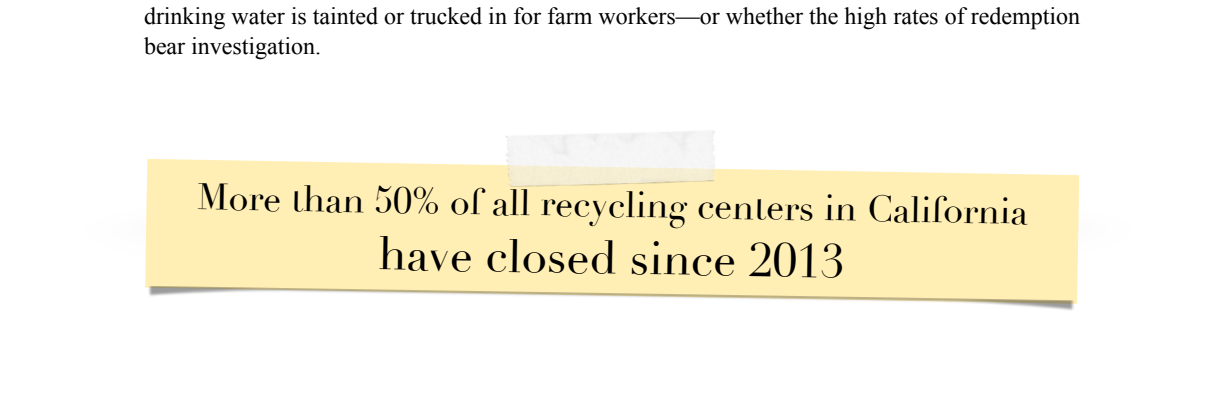
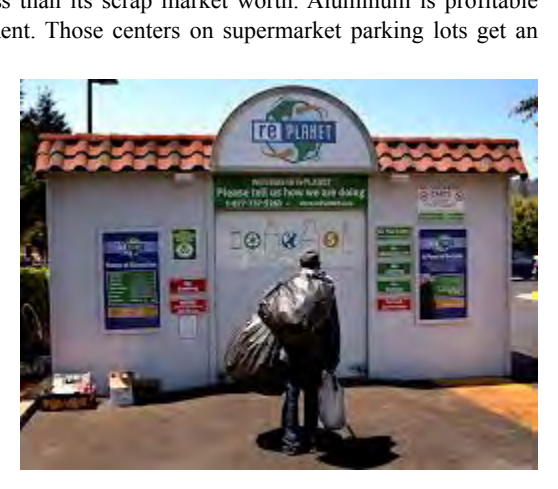
The refundable deposit is meant to incentivize consumers to separate clean containers from the overall waste stream so they can be recycled into comparably high value products from beverage containers to fiberglass and auto parts. Consumers can redeem up to 50 aluminum, 50 glass, 50 plastic, and 50 bi-metal CRV containers in a single visit to certified scrap yards or can be paid scrap value for larger loads. They can also use certified, stand-alone redemption centers. More than 50% of all centers have closed since 2013, leaving 1,200 to serve 40 million Californians. RePlanet was the state’s largest network of redemption centers with hundreds of locations. It went out of business in 2019.
The CRV money refunded to consumers by these centers is reimbursable by CalRecycle. CalRecycle also pays these centers a subsidy known as a processing payment that covers the higher cost of recycling plastic and glass than its scrap market worth. Aluminum is profitable
scrap and thus gets no processing payment. Those centers on supermarket parking lots get an additional “handling fee” to incentivize recycling. All payments, including reimbursements for CRV, are calculated according to weight-based formulas for containers devised by CalRecycle. It is illegal for recycling centers to redeem out-of-state bottles and cans brought to California and for processors to accept them because no Californians paid deposits on them.
Recycling centers buy empties from individuals, then sell loads to processors that bale up multiple loads and sell them on to other processors, mills, and smelters. Recycling centers and processors must be state-certified to

handle CRV materials. Processors are required to retain proof that the CRV was canceled—meaning that containers were physically altered to prevent re-redemption via compacting or flattening of metal or plastic or crushing of glass. A state authorized processor can cancel the containers or can delegate that task to the end buyer. Processors are responsible for keeping proof of cancellation and receipt of shipment from an end user.
Processors function, essentially, as the bank in the financial transactions between recycling centers and CalRecycle. Processors buy containers from centers and issue the centers CRV refunds and processing payments within two business days. They then invoice CalRecycle for the refunded CRV, for the processing payments, and for their administration of the transactions. First, recycling centers fill out and upload a CalRecycle shipping form listing the recycler’s name and address, certification number, contact person, the material types in the load, redemption weight and CRV amount claimed. Purchasing processors receive copies of recycling center forms. They re-weigh and inspect each load to ensure it qualifies for payments. They then enter their own received weight and weight ticket number onto the same shipping form, calculate the CRV, processing payment and administrative costs. Processors then aggregate batches of recycler shipping reports to upload a processor invoice for reimbursement from CalRecycle for those payments. Customer transaction logs, weight tickets, proof of cancellation, and other underlying raw data are supposed to be kept by recyclers and/or processors in case CalRecycle wants to inspect them.
Mis-stating or mixing material types on one weight ticket is illegal. CRV and non-CRV materials in a load need to be weighed separately and separately identified on the weight ticket. Any illegal and invalid ticket is void and subject to restitution. Any claim for CRV or other state payments based on a fabricated weight ticket is fraudulent. Containers on which no California CRV was charged, containers that were previously redeemed, were rejected or subject to line breakage during production, previously baled or never had a refund value are all ineligible for state payments of any kind. Allowing recycling centers to use paper logs to record data makes it difficult to identify and prevent these violations.
RECYCLING CENTERS AND PROCESSORS: OPPORTUNITIES FOR FRAUD Fraud is committed when claims filled out by either recycling centers or by processors are based in whole or in part on false information or falsified documents. A system of all-cash transactions in use today between recycling centers and processors and the lack of requirements to submit underlying, customer transaction logs and proof that processors received material from recycling centers to CalRecycle when billing for reimbursements makes it difficult to spot possible fraud for inspection or to determine if the reported transactions are legitimate. The opportunity for fraud exists wherever cash transactions that dominate the recycling business change hands. Cash transactions cannot be traced. Processors receive state payments by check for all CRV, processing payments, and scrap transactions. But the recycling centers they do business with demand cash reimbursements. All-cash transactions enable recycling centers to report far less in revenue than they actually generate to state and local tax authorities. Recyclers paying workers and rent in cash can short Social Security, Workers’ Compensation and Medicare taxes, not to mention reduce their own corporate tax bill.
Unethical processors also have the opportunity to pay less for the scrap and make a killing on the market for profitable aluminum, for example. All cash transactions can also benefit such processors in forming affiliations with recycling centers that put the centers in their debt. For example, a processor that also controls and leases out locations to recycling centers could lease the locations, together with the necessary equipment, at a rate that is cheaper than customary. In exchange, the recycling centers could agree to take lower scrap payments from the processor because of the break on rent. Such relationships can also open the door to coordination on illegal padding of CRV shipments, fake weight tickets and so forth.
With all cash transactions, processors looking to pad loads illegally can offer more money to beverage makers for defective or broken containers at a greater distance away from them to cover the extra transportation costs for shipping the scrap. Processors use these broken containers to pad CRV loads with non-CRV material and claim whole CRV loads which more than makes up for the higher scrap price paid. No scrap price transactions are reported to CalRecycle, which could otherwise tip the department off for the need to inspect.
When out-of-state scams are involved, processors cooperating with organizers can use cash to finance the purchase of scrap beverage containers in other states. The containers can then be brought into California and sold on the street, then redeemed for the much higher CRV value at cooperating recycling centers—and they can be redeemed over and over again. CalRecycle only asks processors to produce cancellation documents proving that the containers were physically altered to prevent multiple redemptions when a company is targeted for investigation. This makes it easy to operate such scams.
Weight tickets and their underlying data, such as handwritten customer logs reflecting materials bought and sold, are not filed with CalRecycle up front and must only be produced if recyclers are under investigation, offering plenty of opportunity to alter hand-written weight tickets to obtain higher state payments. Strict CalRecycle rules are supposed to be followed on numbering the weight tickets and correcting the weight tickets in case of error. Recycling centers under investigation are often found to have skipped following these rules.
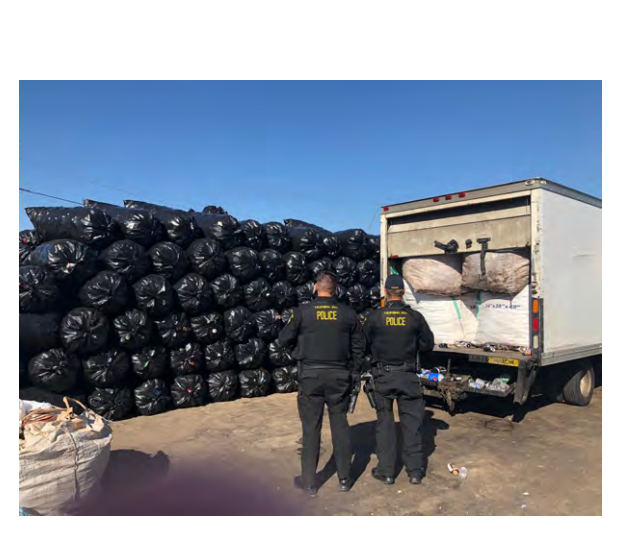
California’s bottle law requires a weight ticket to be issued at the actual time of weighing and is supposed to be signed by the weighmaster who actually weighed the load. If that ticket contains an error, the center must issue a corrected certificate. The word “INCORRECT” must be written across the face of the original ticket. The corrected certificate must have written on it the original weight ticket number and the reason for the correction. Both the original weight ticket with associated documentation and the new corrected certificate are to be recyclable smuggling operation that transported cans and bottles to maintained on premises.
Manually written weight tickets are allowed so long as associated documentation including worksheets and customer logs are kept. Broken or unsealed scales are illegal.
CalRecycle has caught recyclers on failing to keep worksheets signed by weighmasters and truckers that underpin manually created weight tickets; failing to keep original copies of weight tickets that were later “corrected;” failing to properly annotate the original weight ticket and the associated correction certificate; using banned terms such as “scale problems” to justify correction certificates; not consecutively numbering correction tickets so that reprinted or edited weight tickets had the same serial number as the original ticket; and changing dates, times, gross weights, tare weights (weight of a load minus the truck weight), and commodity types on tickets with no legal justification and without producing any of the required documentation. Manually created tickets and logs tracking transactions make fraud easy when it comes to inflating the weights of loads to charge for CRV. Centers can manually change a weight from 4.2 pounds of purchased CRV containers to 42 pounds, for example. Processors can do the same on their invoices.
CALRECYCLE LIMITATIONS Fraud scams are abetted by CalRecycle’s limited reporting requirements, including lack of industry provision of real time data that could flag unusually high volumes of materials claimed for CRV. CalRecycle’s electronic tracking system known as the Division of Recycling Integrated Information System or DORIIS, does not collect nearly enough information, nor does it collect enough in real time, to identify possible fraud.
There is no centralized inventory management system, and no analysis conducted on the flow of materials on an ongoing basis. A system of cash payments, rather than electronic transfers or cancelled checks proving transactions, enables processors to offer more in cash for materials in order to fraudulently pad CRV loads or to offer less for loads that are brought in illegally. Because the payments are not reported to CalRecycle, CalRecycle misses red flags to inspect for fraud.
California requires that only the recycling center and the processor buying the center’s materials turn in paperwork saying how many containers they have handled. Recycling centers are not required to upload copies of their transaction logs into CalRecycle’s tracking system. CalRecycle regularly issues payments without asking for underlying materials to ensure the materials actually existed, were canceled, and delivered for recycling. Manual systems limit the agency’s ability to verify authenticity, audit or identify patterns of potential fraud. Recyclers and processors are not required up front to identify customers, or to report their purchases, sales, and monthly inventory. CalRecycle asks for no proof on the back end that a processor actually received the reported material on hand from a recycling center in the first place. On the front end, CalRecycle accepts weight scale tickets that can easily be altered. The Bottle Bill’s statute and CalRecycle regulations allow the use of hand-written logs recording customer transactions and hand-written weight tickets. These calculations depend on human judgment and honesty. Weights on hand-written tickets can easily be changed to inflate the poundage of loads containing out-of-state or double-counted CRV containers or that are padded with non-CRV bottles and cans. CalRecycle does not require a standard, digital form of weighing loads.
SCAM ANATOMIES Recycling Services Alliance: CalRecycle accusations against recyclers and processors suggest frequent coordination between recycling centers and affiliated processors. RSA, the Sacramento processor, allegedly fabricated weight tickets to support recycling center reports and its own claims to CalRecycle for CRV, processing payments and its administrative costs, according to a10 CalRecycle accusation against the company. The fabricated tickets masked illegal imports of containers from out of state that were then claimed as CRV, according to the accusation.
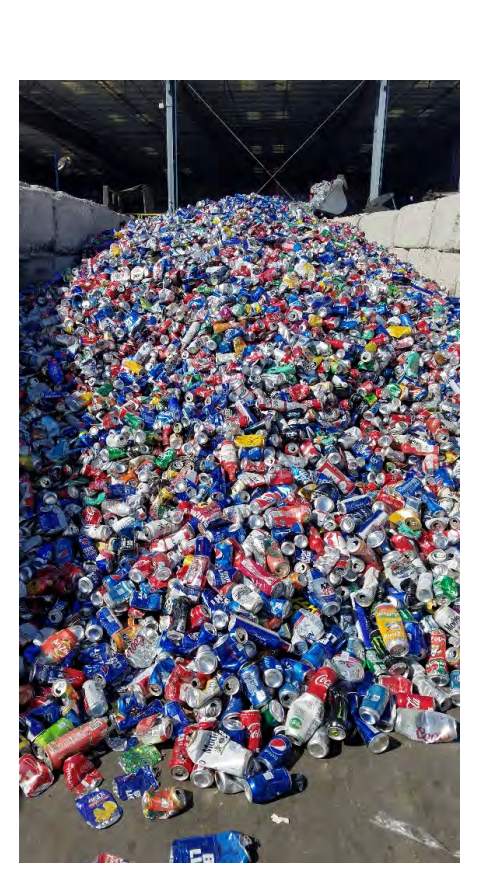
In an initial limited review, CalRecycle discovered that the processor was doctoring weight tickets used to support recycler shipping reports and processor invoices to CalRecycle for payments. A more extensive investigation of claims filed over a three-year period between 2012 and 2015 allegedly found that RSA fabricated weight tickets for 44,555 recycling center shipping reports and filed 2,727 processor claims on that basis. CalRecycle found that RSA officials manually created weight tickets without creating and maintaining work sheets signed by the weighmaster and truck driver. RSA “corrected,” i.e. reprinted and/or edited weight tickets without keeping the originals, used illegal annotations to document problems with scales, and did not issue new serial numbers for the “corrected” tickets. RSA officials changed dates, times, weights and commodity types on tickets without the required documentation.
CalRecycle came to these conclusions after a close examination of seven recycling center weight tickets from Diaz Recycling. These tickets showed that RSA increased the net weight of loads by exactly 200 pounds, resulting in higher CalRecycle payments back to them.
They did this by either increasing the gross weight of the load or decreasing the weight of the truck in order to inflate what was owed to them by CalRecycle. “If the original weight ticket was voided due to problems with the scale and the material was reweighted after the scale was repaired, it is highly unlikely that for all seven of these loads the weight would have increased by exactly 200 pounds,” CalRecycle wrote. “This establishes the fact that these weight tickets were fabricated and that the weight recorded was fraudulent.”
RSA allegedly used a broken, inaccurate, and/or unsealed truck scale. Use of such scales is illegal. “Moreover, scales do not ‘jump,” the accusation states. “The scale software and computer will not print a weight ticket unless the scale is stable. Movement of the scale platform locks out the system and no weight ticket will be printed. Therefore, using ‘Void,’ ‘Scale Problem’ or ‘Scale Jumping’ as an excuse for adding weight to a reprinted weight ticket is evidence of intent to defraud the [CalRecycle Beverage Container Recycling] Fund.”
RSA’s operational manager also admitted to CalRecycle in a telephone call on December 21, 2015 that she frequently added weight to the RSA weight tickets and changed dates and times on “reprinted” weight tickets. “It is clear from the evidence in this matter that the RSA Respondents added weight to the 44,555 weight tickets as pretext, as part of an illegal enterprise, i.e., a scheme to conceal the importation and redemption of CRV on out-of-state material,” the accusation reads. In the end, CalRecycle paid out a total of $80.3 million to RSA for CRV
claims, processing payments and administrative costs. Civil penalties on 91,837 violations of the bottle law and regulations plus interest, CalRecycle costs, and fees brought the total amount to more than $541 million before it was11 settled for $34 million.
RSA pleaded guilty to fraud in recovery of recycling payments. The operational manager was sentenced to seven years in prison but won’t serve a day if she successfully completes five years of probation. The amount of restitution she owes has not yet been determined. She profited from fraudulently claiming CRV refunds on out- of-state containers and manufacturing fraudulent weight tickets to justify inflated state payments and reimbursement claims. She received cash and checks from individual recyclers and embezzled money from RSA. According to a forensic audit of her bank account, the manager got away with more than $418,000. Cases against three other defendants were dismissed. Industry sources estimate that roughly 50 recycling centers closed when RSA was shut down by CalRecycle. One major reason could have been that, without the processor, fraud at recycling centers doing business with RSA could not continue.
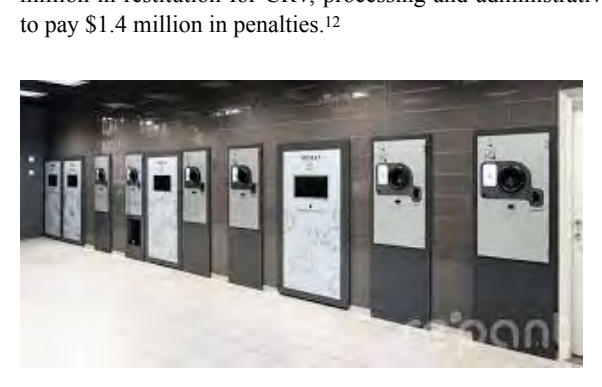
Fraud can occur easily when recyclables are weighed by the truck load, instead of being collected by Reverse Vending Machines that take individual containers and Bag Drop machines, both of which can read bar codes for deposit refund eligibility. A Reverse Vending Machine or Bag Drop system would be verifiable and fraud resistant. Widespread use would also enable Californians to get back hundreds of millions of dollars more a year than the little more than half they are refunded out of an annual $1.5 billion in deposits that they pay. In the case of A+ Recycling in Santa Ana, CalRecycle certified the company as a “dual processor” with six recycling centers and a processing facility. CalRecycle reviewed all of the operations and their transactions covering portions of 2018 and 2019 and could not find proof of cancellation of CRV containers. Nor did the recycling centers prepare or retain consumer transaction logs or receipts. This meant that CRV containers could have been re-redeemed multiple times through the recycling centers. The agency ordered the company to pay $9.3 million in restitution for CRV, processing and administrative payments. It ordered the company12
to pay $1.4 million in penalties.
Other recyclers on CalRecycle’s accusation list are also dual-certified, operating both a processing facility and one or more recycling centers and face similar charges. BC Recycling operated as a Visalia processor and a recycler. It also operated seven other recycling centers in California. A CalRecycle audit found that the company filed claims on beverage containers that had never been canceled. BC allegedly failed to cancel more than one million pounds of PET beverage containers sold to Recycling Services Alliance between September 2014 and February 2015, but claimed $1.3 million in CRV, processing payments and administrative costs. “Cancelation is a paramount duty of all processors to prevent the reintroduction of the beverage13 containers back into the recycling program,” according to the 2020 accusation. “Cancellation, like inspection, is a first-line defense against fraud.”
BC claimed that a different processor in North Hollywood had cancelled the PET beverage containers but had no proof of cancellation from that company, Alpha Recycling Resource Services Alliance. First, Alpha was not authorized to cancel containers, nor did BC sell and ship their PET containers to Alpha. They sold and shipped to RSA, which was also not authorized to perform cancellation and could not prove having done so. Lastly, neither Alpha nor RSA were bona fide end users. Processors are required to show proof of cancellation either from a processor authorized to do so or from the end user that will recycle the materials into new products.
BC also allegedly failed to weigh and inspect all loads of beverage containers that it received from BC’s own off-site recycling centers, invalidating the claims. In fact, among the documents that BC provided to CalRecycle were two weight tickets fabricated by RSA that were used to make claims. In both cases, weight was added to the original tickets, making the associated claims both invalid and fraudulent. “…The beverage containers sold by BC Respondents to RSA were used by RSA to further its illegal enterprise,” the accusation alleges. “RSA re-redeemed the beverage containers and collected CRV for a second time. Knowingly or unknowingly, BC respondents assisted RSA with its unlawful endeavor.” CalRecycle assessed $1.35 million against BC in restitution and $311,000 in penalties.
RECOMMENDATIONS
- Require processors to pay recycling centers for all scrap, CRV, processing and administrative payments by check or electronic transfer. No cash.
- Require all recycling centers to use electronic record-keeping and submit receipts and transaction logs electronically to the agency with each load, along with amounts of scrap material purchased and its value in each load.
- Require all recycling centers to ID and report customers with large loads to CalRecycle daily to flag for investigation those bringing in unusually large quantities of containers for redemption.
- Set up an electronic tracking system requiring processors to report to CalRecycle all CRV loads bought, sold, and shipped to end users and to report inventory on a monthly basis.
- Require processors to report to CalRecycle three days before exports of any CRV material so that CalRecycle can inspect for non-CRV material prior to shipping.
- Switch to an Extended Producer Responsibility System via passage of SB 38 to institute a modernized system at big supermarkets and recycling centers featuring Reverse Vending Machines and Bag Drop Machines that can screen containers for refund eligibility. REFORM OF BOTTLE DEPOSIT LAW IS KEY TO FOILING FRAUD Currently, California’s redemption rate puts it third to last out of ten states. Californians pay $1.5 billion a year in deposits and get back little more than half that money. While California’s consumer redemption rate stands at 57%, redemption rates in Oregon, Michigan, and in other countries such as Norway, Germany and even Lithuania, stand at between 81% and 98%. In all these cases, consumer convenience is put first and nonprofit beverage industry consortiums are put in charge of designing and running deposit systems featuring modern technology such as Reverse Vending Machines (RVMs) and automated bag drops.
When beverage industry participants are allowed to keep some or all of the unredeemed deposits on the proviso that the system be as efficient and technologically advanced as possible, they are incentivized to reduce fraud. SB 38 (D-Wieckowski), a bill to convert our system to an Extended Producer Responsibility (EPR) model that tasks the industry profiting off of beverages to run deposit systems, would require a beverage container stewardship organization to create a statewide clearinghouse—with state approval—to handle payments between stakeholders and to ferret out fraud.
“The Legislature finds and declares that the redemption of beverage container material imported from out of state, previously redeemed containers, rejected containers, and line breakage presents
a significant threat to the integrity of the Beverage Container Recycling Program,” the legislation14 states. The bill assigns to the stewardship organization the task of fraud reduction, in addition to managing everything from deposit beverage registration to clearing deposits.
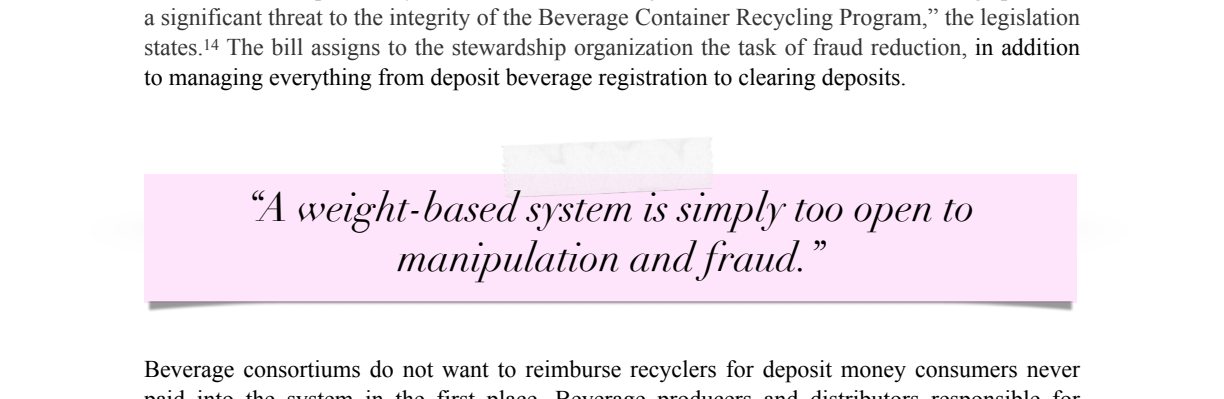
“A weight-based system is simply too open to manipulation and fraud.”
Beverage consortiums do not want to reimburse recyclers for deposit money consumers never paid into the system in the first place. Beverage producers and distributors responsible for deposit systems also want to maximize the amount of recyclable material they can sell to help offset costs. If consortiums lose money, they have less to reinvest in new redemption points for consumers, suppressing redemption rates and missing any state-set redemption targets. State government is in the best position to approve, set redemption targets for, and oversee a well-designed EPR system, but redemption rates in states with successful EPR systems show that industry is best suited to building and running the system architecture. California and Hawaii are the only two states that give the waste hauling industry either a central or lead role in recycling bottles and cans. This is done through weight-based formulas for recyclables gathered in large quantities, rather than via individual count-based systems that are offered directly to consumers via automated technology.
In cutting edge EPR systems, advanced technology allows beverage consortiums direct access to data in real time, and also provides technology that discourages fraud in a way that California’s system does not.
For example, in California a weight-based system of reimbursement for costs of recycling does not leave much room for fraud mitigation. Bottles and cans are canceled via crushing or compacting without any electronic reading of marks. In addition, the California Redemption Value label is not readable while RVMs can recognize unique bar codes or infrared markings as containers are fed into them or into bag drop machinery that sorts and counts them before compaction to verify that containers are eligible for a deposit refund. The need for human honesty in weighing materials is taken entirely out of the equation.
Legislature finds and declares that the redemption of beverage container material imported from out of state, previously redeemed containers, rejected containers, and line breakage presents a significant threat to the integrity of the Beverage Container Recycling Program,” the legislation states.14 The bill assigns to the stewardship organization the task of fraud reduction,
A weight-based system is simply too open to manipulation and fraud. Readable deposit bar codes
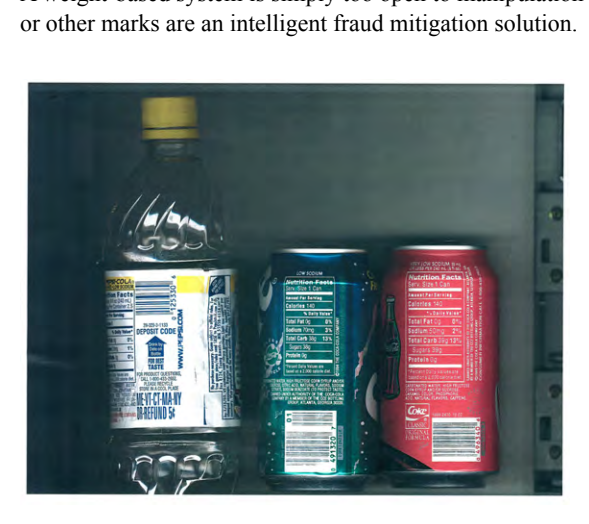
or other marks are an intelligent fraud mitigation solution.
Successful beverage industry legal challenges have prevented states from passing laws requiring a unique bar code on qualifying beverage containers indicating that a beverage was purchased and is redeemable only in that state. Nevertheless, beverage companies participating in EPR deposit systems recognize they save money if they use such marks. A decade ago, Nestle waters North America notified redemption centers in five Northeastern states that it would use separate bar codes in bottle deposit versus non-bottle deposit states. The bar codes apply to Readable bar codes on beverages.
both RVM machines and to redemption centers. “This change now makes it easier to ensure non-deposit product is not sold or redeemed within a deposit15 state,” Nestle said.
CONCLUSION If California chooses an Extended Producer Responsibility model for its bottle deposit system, it will go a long way towards fraud reduction through the use of efficient technology. Such successful systems in Europe use more comprehensive and technology-based approaches using modern Reverse Vending Machines, according to the consultancy Eunomia. “In addition to providing accurate data on container returns…RVMs can prevent double redemption of receipts and containers, and can swiftly and accurately verify whether a deposit should be refunded, so they reduce the risk of error or fraud compared to a manual take-back system,” according to its16 report on managing risk and mitigating fraud in deposit refund systems. “Where RVMs are not in place, centralized counting and verification through technology that can manage large volumes such as that returned through redemption centers can provide the added level of security and reporting. With the co-operation of producers, distributors and RVM providers, security features can be significantly enhanced… Modern RVMs and bulk counting machines scan the containers’ barcodes to check whether they are part of the system and that a refund is due. This means that, in many European countries, beverage container labels are not
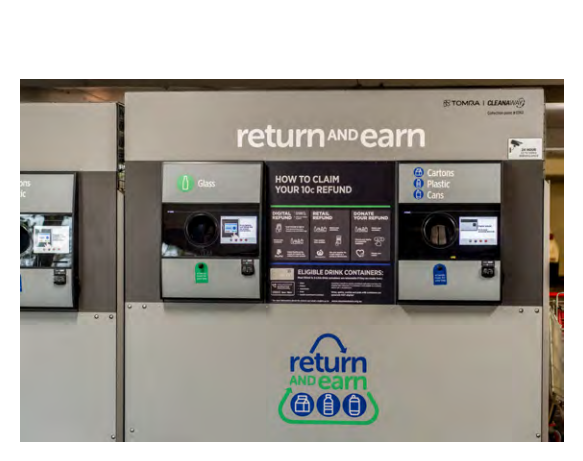
simply intended to provide information to consumers but are central to upholding the integrity of the DRS [Deposit Return System].”
California can take a page from the same book, according to another Eunomia report specifically about the state’s deposit program and the benefits of a producer responsibility system: “Evidence from high performing programs from across the world demonstrates that when producers are given the responsibility for the [Deposit Return System] they can put in place an operationally and financially efficient system that will: allow consumers easy access to redemption points; deliver against redemption targets; affords them control of recycled material necessary to meet minimum recycled content obligations; and ensures system integrity17 through measures to prevent free riders and fraud.”
According to a 2020 Washington state study on container deposit systems by the King’s County Department of Natural Resources and Parks and Seattle Public Utilities, the installation of
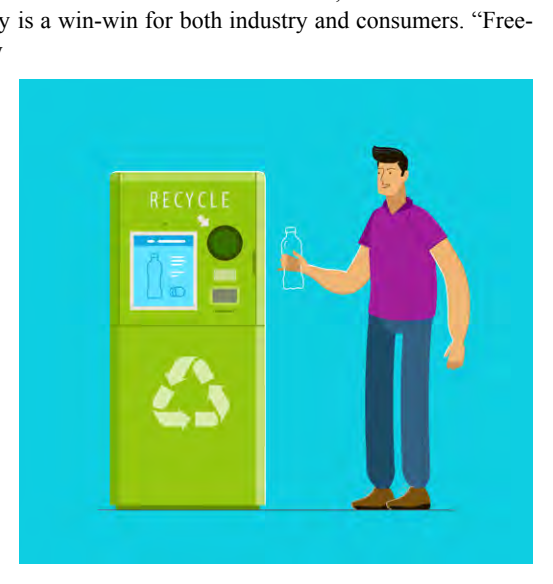
enhanced technology by beverage industry is a win-win for both industry and consumers. “Free-riding in the system can be easily18 identified with bar code verification.
Also, when redemption rates are high, it is possible for redemption rates to actually exceed 100% due to cross border fraud or producers underreporting the units that they place on the market.
Verification of the bar codes can identify those containers that were not sold in Washington and prevent any container from being redeemed more than once.”
In addition, consumers can far more conveniently use RVMs while shopping or find nearby automated bag drops that in states such as Michigan and Oregon serve roughly 2,000 residents apiece, according to industry sources.
California’s population of 40 million would require at least 10,000 redemption points to serve 4,000 residents each for optimal convenience. California’s remaining 1,200 recycling centers have left many counties and cities virtual recycling deserts with urban locations such as San Francisco serving 900,000 residents with two centers.
The use of redemption networks connected to the Internet to collect and monitor data and RVMs that can identify fraud attempts and reject containers that don’t qualify for deposit refunds makes logical sense. Californians deserve back far more of the roughly $600 million they leave in state coffers every year. Increasing the recycling of clean containers into comparable products saves energy and protects the environment. For all these reasons, California needs to move to an Extended Producer Responsibility bottle deposit system that will reduce fraud, return more money to consumers and improve the quality of state recycling.
CITATIONS1 For the text of SB 38, see: https://leginfo.legislature.ca.gov/faces/billNavClient.xhtml? bill_id=202120220SB38 (opens in new tab)2 Investigations by the State Auditor’s Office and the LA Times and state auditors’ office have estimated that fraud could be siphoning off anywhere from $40 million to more than $200 million a year from the deposit program. See: https://auditor.ca.gov/reports/summary/2014-110 (opens in new tab) And https://www.latimes.com/local/la-xpm-2012-oct-07-la-me-can-fraud-20121007-story.html (opens in new tab)3 For an analysis of CalRecycle data showing redemption rates by county and also rates of redemption of bottles and cans by material, see: https://consumerwatchdog.org/2020-data-summary (opens in new tab) and click on “ 2020 Data Summary.xlsx (opens in new tab) ” to download the file.4 For more on Santa Monica recycling and Consumer Watchdog’s investigation of store refusals to redeem containers, see: https://www.consumerwatchdog.org/energy/consumer-and-recycling-advocates-condemn-loss-last-recycling-center-west-405-freeway (opens in new tab)5 The fraud scenarios described in this report come from a combination of industry sources and CalRecycle’s formal accusations against processors and recyclers footnoted in this report.6 See: https://www.latimes.com/local/la-xpm-2012-oct-07-la-me-can-fraud-20121007-story.html (opens in new tab)7 For the CalRecycle press release announcing the RSA settlement, see: https:// www.calrecycle.ca.gov/NewsRoom/2021/09sept/06 (opens in new tab)8 For more on Santa Monica recycling and Consumer Watchdog’s investigation of store refusals to redeem containers, see: https://www.consumerwatchdog.org/energy/consumer-and-recycling-advocates-condemn-loss-last-recycling-center-west-405-freeway (opens in new tab)9 For an analysis of CalRecycle data showing redemption rates by county and also rates of redemption of bottles and cans by material, see: https://consumerwatchdog.org/2020-data-summary (opens in new tab) and click on “ 2020 Data Summary.xlsx (opens in new tab) ” to download the file.10 For the RSA accusation, see: https://consumerwatchdog.org/sites/default/files/2021-08/ RSA%20Accusation.pdf (opens in new tab)11 For the RSA settlement, see: https://oag.ca.gov/news/press-releases/attorney-general-bonta- announces-sentencing-four-year-recycling-fraud-scheme (opens in new tab)12 For the A+ accusation, see: https://consumerwatchdog.org/sites/default/files/2021-08/ A%2B%20Recycling%20Accusation.pdf (opens in new tab) For the BC Recycling accusation, see: https://consumerwatchdog.org/sites/default/files/2021-08/BC%20Recycling%20Accusation.pdf (opens in new tab) and Amended Accusation: https://consumerwatchdog.org/sites/default/files/2021-12/ BC%20Recycling%20First%20Amended%20Accusation.pdf (opens in new tab)14 For SB 38, see: https://leginfo.legislature.ca.gov/faces/billNavClient.xhtml? bill_id=202120220SB38 (opens in new tab)15 For the Nestle announcement, see: https://consumerwatchdog.org/20100406-red-label-letter (opens in new tab)16 Citation from Eunomia’s report, “Preventing & Mitigating Fraud in Deposit Refund Systems, Summary, Page 2: https://www.eunomia.co.uk/reports-tools/managing-risk-and-mitigating-fraud-in-deposit-refund-systems/ (opens in new tab)17 For the Eunomia report on California, see: https://www.eunomia.co.uk/reports-tools/ californias-beverage-container-program/ (opens in new tab)18 For the Washington state report, see: https://kingcounty.gov/~/media/depts/dnrp/solid-waste/ about/planning/documents/task-force-container-study-phase-3.ashx?la=en (opens in new tab)