
Dealing with a time before regulations

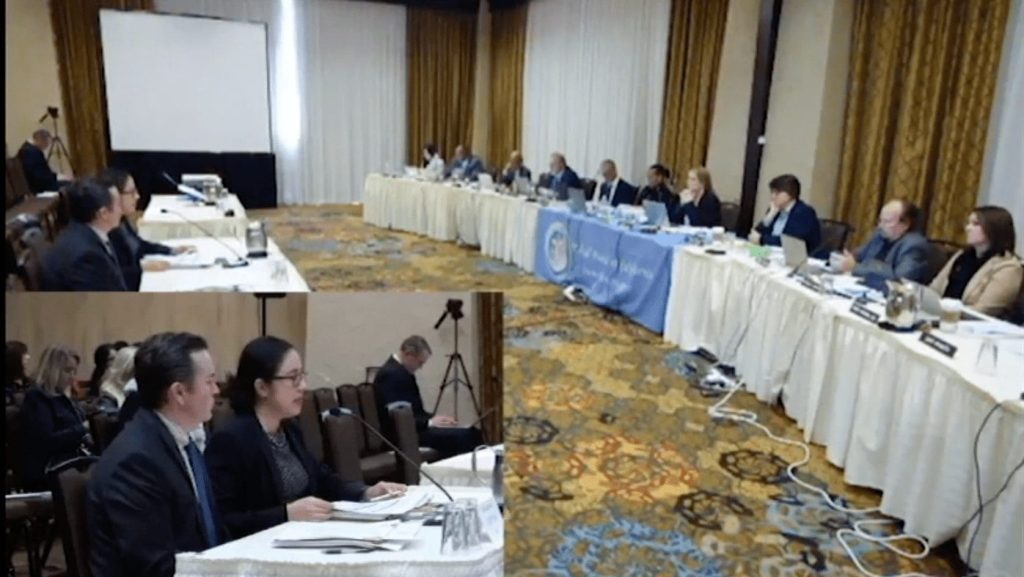
The California stem cell agency's Standards Working Group hammered out very thorough ethical guidelines to ensure human embryonic stem cell lines derived with its funds meet the highest ethical standards.  Those rules, after being approved by the oversight committee, went into effect in November 2006.

But what about lines that were derived before the California Institute for Regenerative Medicine (CIRM) regulations took effect?  If the rules weren't even created yet, how can researchers reasonably be expected to have met all the standards?

It turns out there are some lines that were developed at the cost of millions of dollars that may soon be used in clinical trials. Apparently they don't meet the exact letter of the current regulations, but CIRM would like to be able to consider funding some research involving them.

Nobody was saying whose cells were involved at Friday's SWG meeting.  I suspect it's a line developed by the San Diego company, Novocell.

What the SWG wanted was a process to deal with such cases.

Here's the plan that emerged:

A stem cell line may be deemed acceptably derived before November 2006 if the following criteria are met:

  • Informed consent from woman or couple in IVF (and no indication that original donor would not consent for research).
  •  Approval of the donation protocol by an Institutional Review Board.
  • Compliance with prevailing ethical and legal standards in place at the time of derivation in the jurisdiction where the derivation was carried out.

The process to determine if the criteria had been met would begin with a request to CIRM. The staff would review the request and make a recommendation to the oversight board, the Independent Citizens Oversight Committee.  The review would have to include consideration of the scientific significance of the stem cell line.  The ICOC would consider the request in a public meeting after publicly posting it.

Complicating the SWG's deliberations Friday was the lack of a quorum.  That means the ideas will go to the ICOC as the sense of the group, not a formal recommendation. Ten of the SWG's 19 members were present, but the bylaws require a 65 percent majority.

Given the agency's ongoing difficulties with quorums, here 's another case where all would be better served if a simple majority sufficed.

The quorum issue aside, the SWG proposal makes sense. You can't expect a researcher acting in good faith to have followed rules exactly that hadn't even been spelled out.  To deny funding to such a case makes no sense.

The key element is that the decision be made in public. 


Rate This Article:

Comments:

Post A Comment

You are not logged in, please do so at the top of the page.

Recent Posts in Protecting Patients:

Will 'progressives' let middle class burn to prove their point?

When Anthem Blue Cross announced its controversial premium increases in California recently, the insurer claimed, "a carrier must be able to receive actuarially sound rates." So it is remarkable that "progressive" San Francisco State Senator Mark Leno, a single payer health care advocate, recently introduced eleventh hour legislation codifying Anthem Blue Cross's "actuarially sound" defense of premium increases in law.

Read More »

New rates at Blue Cross are a meager victory

At the shoe store, 40% off qualifies as at least pretty good. So why does regulators' approval of new, lower rates by Blue Cross of California not feel like victory? There are lots of reasons, but first is that the revised Blue Cross rate hikes are still in double digits, averaging 14% and as high as 20%, while average wages are still falling. And Blue Cross could announce another rate hike whenever it pleases, just as many insurers continue to do.

Read More »

Health reform regulation scorecard: The big stuff is headed to court

Wouldn't it be great if we could all deduct our federal income and investment taxes from next year's income? And if we could also deduct that stress-reducing trip to a spa in Bora Bora? And if the government would just take our word for it? Fantasy for us, but the health insurance industry think that's what federal health reform ought to allow, on a corporate scale.

Read More »

Seattle Story: Pretty good ending

The worst definitely didn't happen in Seattle. The National Association of Insurance Commissioners deferred the worst insurance industry demands for weakening the implementation of health care reform. For a body so closely linked to...

Read More »

Obama's victory lap in rush hour gridlocks LA to raise $1 million for Congress

It took my wife an hour and half to make the two mile commute home Monday, after the secret service closed some of LA's busiest streets at rush hour to shuttle the president from his Beverly Hills hotel to a fundraiser for Congress...

Read More »

View All Next »

Forward This Page To A Friend

CA Hospitals Risk Collapse In Earthquake