
Stem call agency stumbles over quorums again

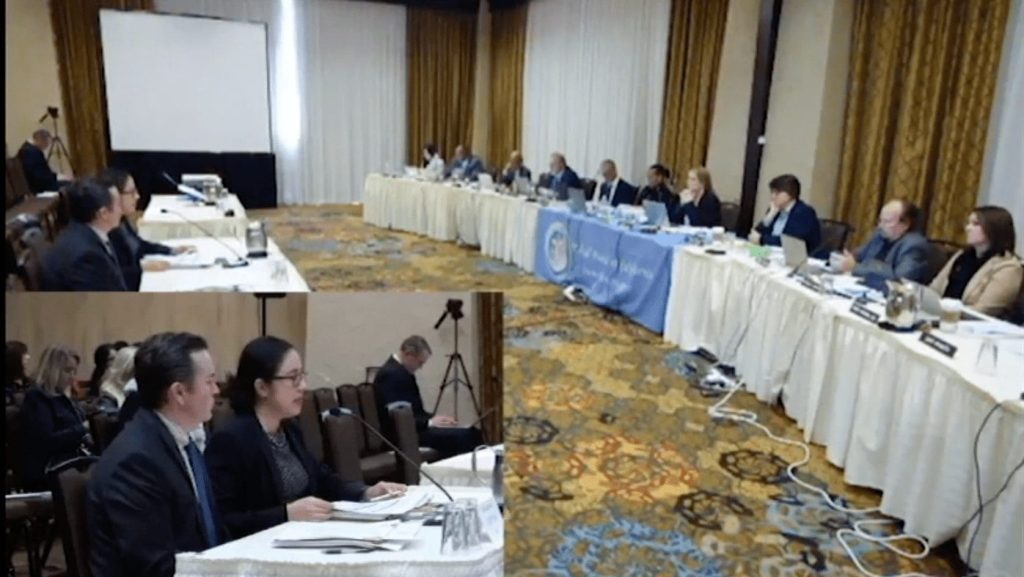
Two California stem cell agency subcommittees meeting Friday and Saturday faced an ongoing problem -- mustering enough members for a quorum.

In a particular irony the Governance Subcommittee on Friday lacked a quorum the entire time members who were present discussed a possible solution by changing bylaws so some members of the agency's board can attend board meetings by telephone, though one member joined later rounding out a quorum.

Saturday's Finance Committee meeting never had a quroum.

The 29-member Independent Citizens Oversight Committee (ICOC), comprised of high-powered academic and research institution executives, representatives of the of the life science industry and patient advocates is the board for the $6 billion enterprise. It's scheduled to meet seven times a year and most of the sessions are now envisioned as two-day meetings.  Under its bylaws members must attend ICOC meetings in person.

The quorum difficulties are exacerbated by the requirement for 65 percent of the members rather than the usual 50 percent of members. The rules allow subcommittees -- like the Governance and Finance committees  -- to hold meetings through telephone conference calls. And these two meetings were by telephone conference call.

Friday Governance Committee members Sherry Lansing (Chair), Claire Pomeroy, Bob Klein, Duane Roth and Jeff Sheehy discussed a proposal that while stressing "members are expected to attend as many many ICOC meetings as possible" would allow some members to attend by telephone or video conference to muster a quorum. Phil Pizzo joined the meeting after the quorum discussion.

The rules allow the academic and business members of the ICOC to send alternates. Patient advocates are not allowed to send a designee.

Lansing said the the goal of Friday's meeting was to gather ideas on the details of such a plan, have CIRM staff refine the language, take the proposal up at at the next Governance Committee meeting and present recommendations for action at the ICOC's December meeting.

The initial concept discussed would have authorized up to three members per meeting to participate by telephone or video conference and offer a priority to those who could do so:

-- Members with significant medical needs.
-- Members who do not have the power to appoint an alternate.
-- Members traveling out of state
-- Other members.

Participation by teleconference could be limited to no more than two meetings per member per year.

An important safeguard is that the public would have access to the remote telephone locations.

Roth suggested that instead of limiting telephonic participation to a specific number, the limit should be a percentage to reflect the fact that there are sometimes vacancies on the board. He suggested a 20 percent cap or five when the board is filled.

Sheehy was among those saying that patient advocates ought not to be counted toward the cap, nor limited in the number of sessions they could attend by telephone or video conference.  This was in recognition of the fact that a number of the patient advocates are coping with medical issues.

I'm waiting to see the exact bylaw language developed by CIRM staff and taken up at the next Governance meeting. The general concept is sound, though having as many as five members and additional patient advocates calling in strikes me as excessive.  

Certainly, though, having an involved member attend by phone, is preferable to drafting an alternate from the audience to round out a quorum as literally happened in August.

I offered this solution:  Lower the quorum to 50 percent and add sanctions for members who don't show up.

And there's this troubling thought: No matter what bylaw change is is proposed in December, it's by no means certain -- based history -- that the ICOC will have a quorum when the question comes up for a vote.

Rate This Article:

Comments:

Post A Comment

You are not logged in, please do so at the top of the page.

Recent Posts in Protecting Patients:

Will 'progressives' let middle class burn to prove their point?

When Anthem Blue Cross announced its controversial premium increases in California recently, the insurer claimed, "a carrier must be able to receive actuarially sound rates." So it is remarkable that "progressive" San Francisco State Senator Mark Leno, a single payer health care advocate, recently introduced eleventh hour legislation codifying Anthem Blue Cross's "actuarially sound" defense of premium increases in law.

Read More »

New rates at Blue Cross are a meager victory

At the shoe store, 40% off qualifies as at least pretty good. So why does regulators' approval of new, lower rates by Blue Cross of California not feel like victory? There are lots of reasons, but first is that the revised Blue Cross rate hikes are still in double digits, averaging 14% and as high as 20%, while average wages are still falling. And Blue Cross could announce another rate hike whenever it pleases, just as many insurers continue to do.

Read More »

Health reform regulation scorecard: The big stuff is headed to court

Wouldn't it be great if we could all deduct our federal income and investment taxes from next year's income? And if we could also deduct that stress-reducing trip to a spa in Bora Bora? And if the government would just take our word for it? Fantasy for us, but the health insurance industry think that's what federal health reform ought to allow, on a corporate scale.

Read More »

Seattle Story: Pretty good ending

The worst definitely didn't happen in Seattle. The National Association of Insurance Commissioners deferred the worst insurance industry demands for weakening the implementation of health care reform. For a body so closely linked to...

Read More »

Obama's victory lap in rush hour gridlocks LA to raise $1 million for Congress

It took my wife an hour and half to make the two mile commute home Monday, after the secret service closed some of LA's busiest streets at rush hour to shuttle the president from his Beverly Hills hotel to a fundraiser for Congress...

Read More »

View All Next »

Forward This Page To A Friend

CA Hospitals Risk Collapse In Earthquake